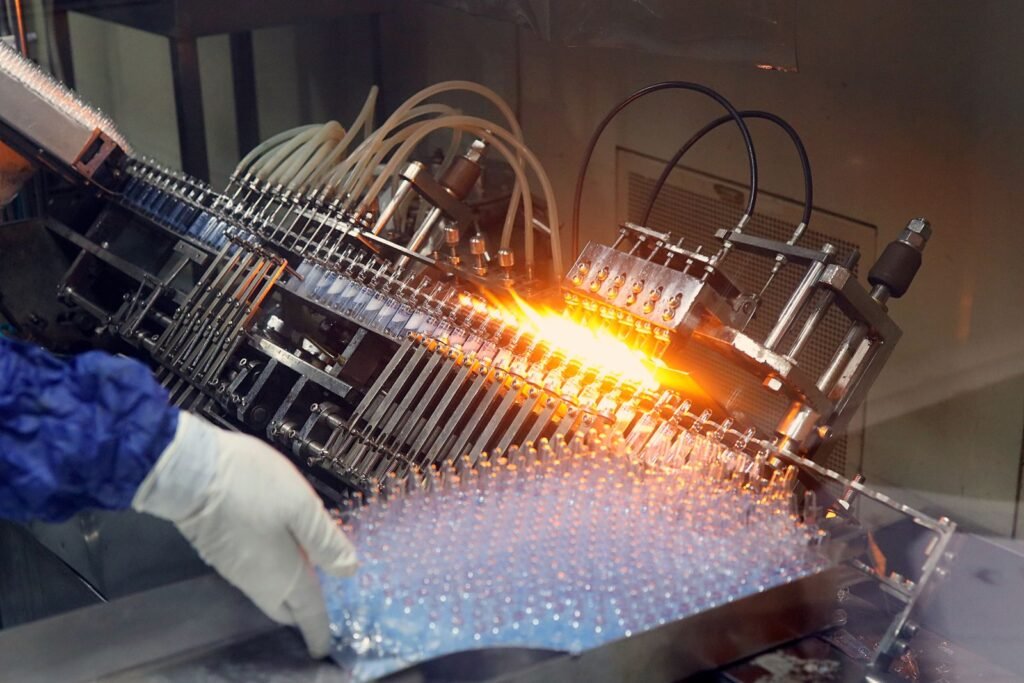
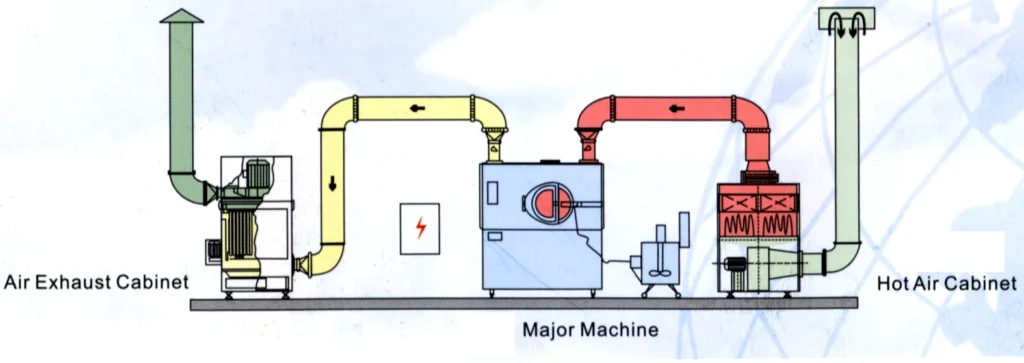
A tablet coating machine is easier to specify once you split it into four systems: the pan assembly that tumbles the bed, the spray system that applies the coating, the air handling system that dries it, and the controls that hold the recipe. Most coating problems trace back to one part inside one of those four, not to the formulation.
These components of a tablet coating machine each shape the final result. This guide walks through the parts of a tablet coating machine group by group: what each one does, which ones wear out first, and how to match the parts list to your dosage form and batch size. We build and commission these machines, so the emphasis is on the parts operators actually touch and replace.
Key Takeaways
- Three main machine types exist: standard pan, perforated pan, and fluidized bed. Each type has different parts and uses.
- Key parts include the coating drum, spray guns, air handling unit, and controls. Each part affects coating quality.
- Regular maintenance prevents defects. Check spray guns, pump tubing, and seals often. Replace worn parts on schedule.
- Match the machine to your product. Consider dosage form, batch size, and solvent type before buying.
- When defects appear, check the spray system or drying system first. Adjust settings to fix issues.
Three Machine Types, and Why the Parts List Changes With Each
The tablet coating machine parts list shifts with the machine type. Three main designs dominate pharmaceutical production: the standard coating pan, the perforated pan coater, and the fluidized bed coater. Each design changes the basic parts & components of film coating machine builds.
Standard coating pan – where it still earns its place
A standard coating pan is a circular metal pan tilted on a stand. An electric motor rotates the pan. Tablets tumble inside a closed stationary space. Heated air passes over the tablet bed surface. A central duct removes moist air.
This design suits traditional sugar coating. Sugar coating applies 20 to 50 layers, and each layer needs spraying and drying. The standard pan handles this multi-stage work well. It also fits small-batch production, laboratory coating, and research centers. Confectionery and chocolate coating use the same design. Low initial investment and simple maintenance add to its appeal. The simple design also adapts more easily for explosion-proof modifications.
The limitation is drying capacity. Air only reaches the exposed bed surface. Drying takes longer. This makes the standard pan a poor fit for aqueous film coating.
Perforated pan coater – why it became the film-coating default
A perforated coating pan uses a horizontal drum with deliberate holes throughout its shell. The drum rotates on a horizontal axis inside an enclosed system. Heated air flows directly through the perforations and through the tumbling tablet bed. The air exits from the rear.
This through-drying produces a more uniform temperature in the spray area. Heat exchange efficiency is much higher than with a traditional pan. The risk of over-spraying during drying drops significantly. These traits matter for aqueous film coating. Water has a high latent heat of vaporization, about 539 kcal/kg, compared with ethanol at about 200 kcal/kg. Faster solvent evaporation reduces inconsistent film formation.
The parts list reflects this design. A perforated pan coater needs a spray bar nozzle or gun inside the drum. Independent control of pattern and atomizing air is standard. Exchangeable drums are often available. These features make the perforated pan the default for film coating and enteric coating in most film coating machines today.
Fluid-bed and Wurster systems – pellets, granules and mini-tablets
A third design lifts the bed on a column of air instead of tumbling it in a drum. In a fluid-bed or Wurster coater, process air fluidizes the cores, and the spray nozzle sits at the bottom of the chamber (bottom-spray Wurster), at the top, or tangentially in the side wall. Because there is no pan, the parts list drops the drum, the perforations and the baffles entirely, and adds a distribution plate, a Wurster partition column, and a filter housing with shake-down or cartridge cleaning.
Fluid-bed coaters suit pellets, granules, mini-tablets and multiparticulates – cores small enough to pass through the 2-3 mm perforations of a standard coating pan. They dry faster than any pan design and give the most uniform coat on small cores. The trade-off is attrition: fragile tablets survive a tumbling pan better than a fluidized bed. So before you compare parts lists, check which of the three designs a machine belongs to. A pan part and a fluid-bed part are rarely interchangeable.
The Pan Assembly – Drum, Perforations and Mixing Baffles
The coating drum – SS316L shell, and how it sets your batch size
The coating drum is the vessel that holds and tumbles the tablet bed. Most pharmaceutical drums use SS316L stainless steel. This grade resists corrosion from the coating solution and survives repeated cleaning cycles. The smooth interior also limits tablet damage during rotation.
Drum volume sets the batch size for tablet coating machines. A larger drum holds more tablets, but it also needs more air and more spray capacity to match. The working load usually stays well below the full drum volume. That headspace allows the bed to tumble freely. A drum filled too high will not mix well, and the coating will land unevenly.
Perforations – why two to three millimetre holes decide your drying rate
A perforated coating pan carries thousands of small holes across its shell. These holes typically measure two to three millimeters. They look minor, but they control the entire drying process. Process air passes through the holes and then through the moving tablet bed.
Hole size and open area together set the airflow rate. More open area means faster moisture removal. Smaller holes keep tablets inside the drum. A blocked or partially blocked hole pattern will slow drying and cause wet spots. Operators should inspect the perforations during cleaning.
The role of the coating pan and spray nozzle becomes clear here. The pan moves the tablets, and the nozzle delivers the coating solution. The perforations then remove the solvent. All three must work together. This balance explains why different types of tablet coating machines use different drum designs. A film coating machine built for aqueous coating needs strong through-bed airflow. A standard pan without perforations cannot match that performance.
Mixing baffles – the part that decides whether every tablet sees the spray
Baffles are SS316L projections welded or bolted to the inside of the drum. They lift the bed and cascade it back through the spray zone, so the tablets at the centre of the load get the same exposure as the ones near the wall. Without them the bed slides as a single mass and the middle of the load stays under-sprayed – a fault that reads like a formulation problem but is mechanical.
Baffle count and height are set for a working load range. Run the drum too empty and the baffles throw the tablets too far, raising edge chipping and dust. Run it too full and the bed cannot cascade at all, and coating uniformity drops. Baffles also take the wear: check the welds and the leading edges for rounding during every cleaning cycle. Sugar coating sometimes replaces them with a distribution rake, because syrup is poured rather than atomized. If your product needs a drum with no perforations at all, see our BGWE poreless coating machine.
Motor, gear box and drive – the part that sets bed turnover
A heavy-duty motor and a reduction gear box sit in the technical area behind the drum and turn it at a controlled, usually variable, speed. The drive sets bed turnover, which sets how often each tablet passes through the spray zone – so pan speed is a coating parameter, not just a mechanical one. Too slow gives poor mixing and twinning; too fast raises edge chipping and dust.
The gear box is one of the few parts with a scheduled service interval rather than a wear-and-replace one: oil changes and shaft seal checks belong in the maintenance calendar. On solvent-based lines the motor and gear box must be specified to the same explosion-proof rating as the rest of the machine. Our high efficiency intelligent coating machine range covers both aqueous and solvent configurations, so ask for the drive rating to be stated on the quote.
The Spray System – Guns, Pumps and the Arm That Holds Them

Spray guns – fluid nozzle, air cap and needle are all consumables
The spray guns sit at the heart of the tablet coating process. Each gun holds a fluid nozzle, an air cap, and a needle. The needle opens and closes to control flow. Cylinder air retracts the needle to open the fluid path, and a spring returns it to close. The needle stroke is what meters the shot. Atomization air then turns the coating solution into fine droplets. Without that air, the liquid would drop onto the tablets and ruin the batch.
All three gun parts are consumables. They wear, clog, and stick over time. Atomization air pressure controls droplet size. Higher pressure yields finer droplets, and lower pressure yields larger ones. Wrong pressure causes defects like orange peel, picking, or bridging. Pattern air widens or narrows the spray fan. Poor overlap leaves some tablets double-sprayed and others missed. All three gun parts need inspection before every batch on any film coating machine.
| Component | Function |
|---|---|
| Fluid nozzle | Shapes the liquid stream |
| Air cap | Directs atomization air |
| Needle | Opens and closes flow |
Peristaltic pump and solution tubing – where coat weight actually drifts
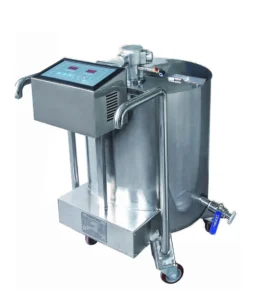
A peristaltic pump delivers the coating solution from the tank to each gun. Solution tubing carries that liquid the rest of the way. The pump tubing stretches and wears from constant squeezing. A thinned tube drops the flow rate, and coat weight comes in low. This drift is quiet and easy to miss.
The spray arm, or manifold, positions all guns at equal spacing across the bed. Better film coating machines auto-adjust the arm as bed level changes. Cheaper units need manual adjustment. A misaligned arm breaks the spray pattern and hurts drying uniformity. Operators should track pump tubing life and arm position together. Both affect how much coating each tablet receives.
Air Handling – AHU, Ductwork, Blowers and Exhaust
Air handling unit – pre-filters, HEPA, heating and dehumidification
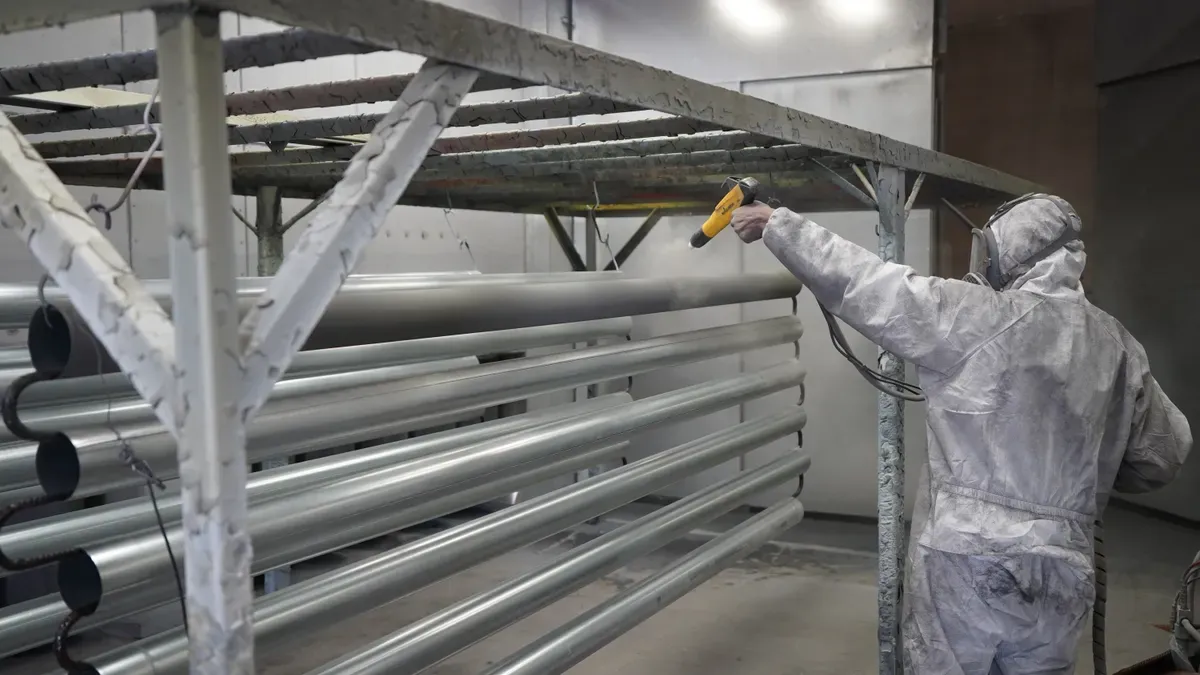
The air handling unit conditions every cubic meter of process air. A pre-filter removes coarse dust, and a HEPA filter captures finer particles. This staged filtration protects pharmaceutical products from contamination.
Heating and dehumidification follow filtration. The AHU warms inlet air to the recipe temperature and removes moisture. In film coating, drying air must evaporate water from the coating solution. Humid supply air slows drying and leaves the tablet bed tacky. A film coating machine depends on this stable supply.
The AHU belongs with the tablet coating machine parts that operators undervalue. The coating pan turns the bed, but the AHU supplies the energy for solvent removal. If it cannot hold its set points, coating quality drops.
Inlet and exhaust ductwork – plenums, dampers, and the leaks that quietly ruin batches
Ductwork carries conditioned air into the drum. Inlet plenums spread air across the perforated shell. Exhaust plenums collect moisture-laden air. Dampers balance flow between zones. A slight imbalance changes the airflow pattern through the tablet bed. The spray nozzles may work perfectly, yet uneven air creates wet patches.
Leaks quietly ruin batches. A cracked gasket on the inlet plenum pulls unfiltered air into the drum. A leak on the exhaust side lowers negative pressure, so solvent vapor lingers. Operators should inspect duct connections and plenum gaskets each cleaning cycle.
The exhaust blower closes the loop. A weak blower extends drying time. A blocked filter raises humidity inside the drum. The guns atomize coating solution into fine droplets, but wet exhaust air prevents them from setting evenly. These symptoms appear in coating quality, not in machine alarms. Checking static pressure helps find problems early. Routine leak checks belong in pharmaceutical maintenance schedules.
Controls – PLC, HMI, Sensors and Recipe Control
PLC and HMI – what an operator actually sets and monitors
The programmable logic controller, or PLC, runs the machine logic. Most production coaters run on an industrial PLC, and the platform is worth naming in your order – Siemens, Allen-Bradley or equivalent – because it is not a field-swappable choice later. The human-machine interface, or HMI, gives the operator a full-color screen for digital monitoring and real-time adjustment. From this screen, the operator sets spray rate, drum speed, inlet and outlet air temperature, and airflow.
The HMI also stores recipes. Ask two things when you compare controllers: how many recipes the HMI holds, and whether recipes can be locked. A locked recipe turns changeover into a menu selection rather than a re-teach, and it keeps an operator from editing a validated process by accident. Audit trail and data logging follow 21 CFR Part 11 for electronic records. The operator sets pan speed and spray rate on the control panel. Process timing is also controlled from the HMI. Atomizing and pattern air pressure are read from gauges. These settings shape every film coating run.
The sensors feeding the loop – temperature, pressure, flow, load cells
Sensors feed real-time data back to the PLC. A dual-zone temperature monitoring system tracks conditions. A non-contact sensor measures tablet bed (core) temperature directly. Inlet air temperature is monitored separately. Exhaust temperature serves as an estimate of bed temperature. The bed temperature is measured, monitored, and recorded within a validated range.
Advanced PID algorithms then adjust heating and airflow to hold optimal drying conditions. This prevents coating defects before they form. Airflow across the tablet bed depends on volume, velocity, temperature, and relative humidity of incoming air. Negative pressure in the drum is also monitored. Low spray rates can make coats brittle, and high rates can make tablets sticky. The control loop keeps the coating solution application even. A well-tuned film coating machine depends on these sensors working together.
Loading, Discharge and Cleaning – the Parts Operators Touch Most
Loading door, guide plates and auto loading
The loading door sits at the front of the coating pan. Operators open it to charge tablets before each batch. The door must seal tightly during operation. A poor seal lets air escape and disrupts airflow through the bed. This imbalance affects drying and film coating quality.
Pan cabinet doors need hinges and gaskets for leak-proof operation. Filter-access doors should open easily for filter changes. One end carries a handle, and the other end carries hinges. These design details protect the pharmaceutical product from contamination.
Guide plates direct tablets into the coating drum during loading. They are matched to a specific drum diameter and drum opening, so they are ordered against your machine model rather than as a generic size. Check that the plate edge sits flush with the drum opening before every charge, and re-seat the plate after any drum change. A misaligned plate spills tablets or damages the drum edge.
Automatic loading systems reduce manual handling. Treat loading and unloading as two separate line items when you specify a coater: they are not bundled by default, and the quote should list them separately. Confirm which of the two your configuration includes before you plan the line, because the choice decides whether you need an operator at charge, at discharge, or at both. Auto loading saves labor and limits dust exposure.
Discharge chute, door actuators and seals
The discharge chute guides coated tablets out of the drum after the coating process ends. Its slope and width affect tablet flow. A narrow chute slows discharge and raises the risk of tablet damage. A wide chute speeds the process but needs a larger machine frame.
Door actuators open and close the discharge door. Pneumatic or electric actuators provide consistent force. Worn actuators leave the door partly open. That gap breaks the seal and changes internal pressure. The machine must run with all necessary process and safety interlocks. Alarms trigger for conditions such as cabinet door open, exhaust blower trip, pan motor trip, inlet blower trip, and spray arm out. Operation restarts only after all interlocks are confirmed working.
Seals around the discharge door wear from repeated cycles. A worn seal leaks coating solution residue and process air. Operators should inspect seals during every cleaning cycle. Replacement seals belong in the spare parts kit. Proper seal maintenance extends the life of the coating drum and keeps drying conditions stable.
Wear Parts and Spare Parts Priority – What to Stock Before You Need It
Which parts wear first, and the symptom you see when they do
In a film coating machine, the spraying gun wears faster than expected. The fluid nozzle, air cap, and needle erode from repeated contact with abrasive coating solution. A worn set of nozzles changes the droplet size. Orange peel appears on the tablet surface. The same defect shows up when the needle fails to seat fully. A dirty air cap also produces uneven spray coverage.
The peristaltic pump tubing wears next. Constant pinching thins the tube wall. The flow rate drops, and coat weight drifts low without any alarm. Exhaust plenum seals and damper gaskets also fail quietly. A small leak disrupts the airflow through the perforated drum. Drying slows, and tablets come out tacky. These symptoms often point to a part that costs little to replace.
Wear in the coating drum itself is slower. The SS316L shell resists corrosion, but the perforations can clog. You see wet spots in the same area each batch. This pattern signals clogged perforations. Check the holes with every cleaning cycle. Early inspection catches wear before it leads to a coating failure.
Consumables kit vs emergency kit – how to size each
Build two separate spare parts kits for any coating pan. The consumables kit holds items that need scheduled replacement. This set includes pump tubing, spray tips, air caps, needles, and door seals. Many operators also add a spare coating solution line. For film coating, check the consumables kit before each campaign. Replace these parts on a calendar or batch-count schedule. Do not wait for failure.
The emergency kit covers parts that can stop a shift. These parts include a complete gun assembly, a pressure sensor, and a discharge door actuator. Size the emergency kit for one full replacement of each critical component. The consumables kit, by contrast, needs to cover the normal wear interval. A small pharmaceutical plant can run with one set of each. A larger site should keep enough for one week of production. Store both kits away from heat and moisture. Label every item with the part number. This practice shortens downtime and protects coating quality and pharmaceutical quality.
| Part | Symptom when it wears | Replacement trigger | Which kit, and how many |
|---|---|---|---|
| Fluid nozzle, air cap, needle | Orange peel, uneven coverage | Inspect every batch; replace on visible wear | Consumables – one full gun set per machine |
| Peristaltic pump tubing | Coat weight drifts low, with no alarm | Calendar or batch count, before it fails | Consumables – two sets |
| Door seals, plenum gaskets | Air leaks, tacky tablets, longer drying | Inspect every cleaning cycle | Consumables – one set |
| Solution line and inline filter | Pressure fluctuation, clogged gun | Per campaign | Consumables – one spare line |
| Complete gun assembly | Gun cannot be rebuilt in place | On failure | Emergency – one |
| Pressure or temperature sensor | Reading drifts or alarms falsely | On failure or failed calibration | Emergency – one of each critical type |
| Discharge door actuator | Door will not seal | On failure | Emergency – one |
Size the two kits differently. The consumables kit has to cover the normal wear interval – one set is enough for a single-shift plant, while a multi-shift site should hold about a week of production. The emergency kit is simpler: one full replacement of each critical component, no more.
Preventive maintenance extends equipment life. Run a spray pattern test each batch. Inspect the pan surface after every coating run. Replace nozzles every 3-6 months under active production. These habits protect quality and reduce downtime.
Send your dosage form, batch weight, coating type and solvent to our team, and we will return a parts-level specification for the right machine – down to the gun count, the air handling duty and the spare parts kit we would ship with it. Start from our tablet coating machines, or from the rotary tablet press if you are specifying the line upstream of the coater.
Two parts of this guide now have their own pages: the defect-to-part troubleshooting guide if something is going wrong on the line right now, and how to choose a tablet coating machine if you have not bought yet.
Where These Numbers Come From
The figures in this guide fall into three groups: physical constants, published planning intervals, and ranges quoted from our own machines. Knowing which is which matters more than the numbers themselves.
- Water 539 kcal/kg, ethanol about 200 kcal/kg – latent heat of vaporization at the boiling point, from standard physical data tables (for example OpenStax College Physics, Table 14.4: water 2256 kJ/kg = 539 kcal/kg, ethanol 854 kJ/kg = 204 kcal/kg). These are physical constants, not machine performance figures.
- Replace nozzles every 3-6 months – a planning interval quoted in the maintenance checklist linked above, not a value we measured. Treat it as a starting point and tighten it from your own spray pattern tests.
- Perforations of 2-3 mm – the usual range on pharmaceutical perforated pans, not a universal standard. Confirm the actual hole size and open area on the machine you are quoting, because both set your airflow.
- Which parts wear first, and the symptoms they show – from commissioning and service work on our own machines, not from a published study. Your order will vary with your formulation, spray rate and shift pattern.
Frequently Asked Questions
What are the main parts of a tablet coating machine?
Four systems cover almost every part: the pan assembly (drum, perforations, baffles, motor and gear box), the spray system (guns, peristaltic pump, tubing, spray arm), the air handling system (AHU with filters and heating, inlet and exhaust ductwork, blowers), and the controls (PLC, HMI, sensors). Loading, discharge and CIP parts sit alongside them.
What is the difference between a perforated coating pan and a standard coating pan?
A standard pan is a tilted, solid drum where heated air passes over the exposed bed surface, so drying is slower and it suits sugar coating and small batches. A perforated pan has thousands of small holes in the shell, so process air passes straight through the tumbling bed. That through-drying is why the perforated pan became the default for aqueous film coating.
Which tablet coating machine parts wear out fastest?
The spray gun parts – fluid nozzle, air cap and needle – wear first, because they sit in an abrasive coating stream. Peristaltic pump tubing is next: it thins from constant pinching and quietly drops the flow rate, so coat weight comes in low with no alarm. Door seals and plenum gaskets fail quietly too, and show up as longer drying rather than as a fault code.
How many spray guns does a coating pan need for my batch size?
Work from bed width, not from batch weight. The guns sit at equal spacing across the bed, and their spray fans must overlap slightly without doubling up. A wider drum needs more guns to hold that coverage, and the pump has to deliver the combined flow. Undersize either one and the batch runs long.
Can one coating machine handle both aqueous and solvent-based coating?
Sometimes, but only if it was specified for both from the start. Solvent coating needs explosion-proof motors, sensors and control panels, plus solvent recovery on the exhaust. An aqueous-only machine cannot be upgraded to that safely later, so decide the solvent before you order.
What should I send a supplier before ordering a coating machine or spare parts?
Send your dosage form and tablet dimensions, target batch weight, coating type (film, sugar, enteric) and solvent (aqueous or organic), required pan or drum size, and your local power supply. For spare parts, send the machine model, serial number and a photo of the part nameplate – that shortens lead time more than anything else.