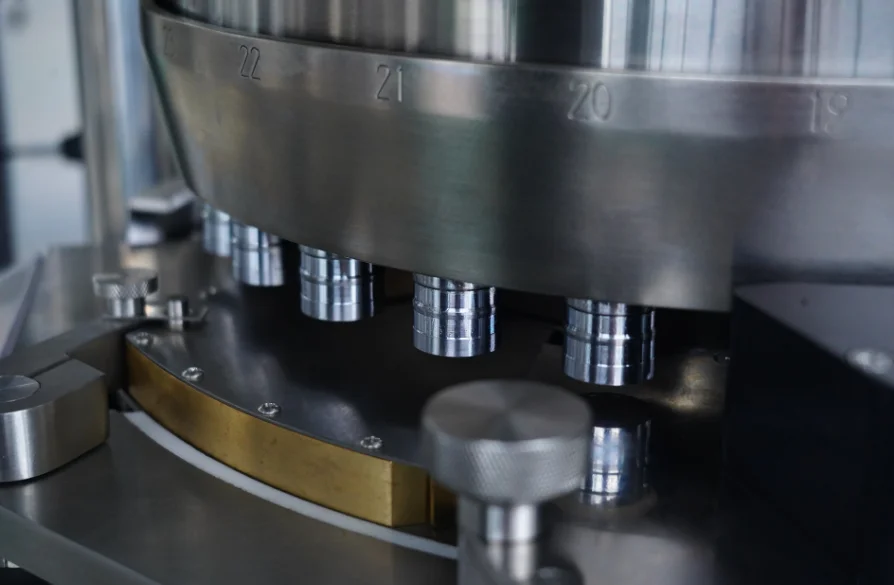
The right gummy machine supplier depends on your recipe, forming process and production target. A compact depositor, a starchless production line and a starch mogul system solve different problems. Start with the process you need, then compare suppliers against the same written requirements.
This guide presents ten suppliers to consider for commercial gummy manufacturing. It covers their published equipment ranges, the questions to ask before requesting a quotation, and how to compare a complete production system with an individual machine.
Publisher disclosure: This guide is published on Grand Machinery’s Grand GelGumi specialist website and includes Grand Machinery in the shortlist. The numbered list is an editorial shortlist, not an independently measured market ranking. Supplier information was reviewed against official product literature in November 2026; inclusion does not mean that every machine has been independently tested.
Quick Comparison: 10 Gummy Machine Suppliers
Use this table to identify a relevant starting point. The “question to ask” column is a purchasing prompt, not a claim that a supplier has a particular limitation.
| Supplier | Published equipment focus | Question to ask |
|---|---|---|
| 1. Tanis Confectionery | Integrated systems for gums and jellies | How will the proposed process be demonstrated with our recipe? |
| 2. Baker Perkins | Starch-free cooking and depositing systems | Which formulation and mould conditions support the proposed process? |
| 3. Grand Machinery / Grand GelGumi | Gelatin, pectin and starch mogul equipment routes | Which model and line scope match our formulation and output? |
| 4. Syntegon (Makat) | NutraFlash starchless gummy production systems | What is included from kitchen through finishing? |
| 5. tna solutions | Starch mogul forming and associated handling systems | How will starch handling, conditioning and finishing connect? |
| 6. CHOCOTECH | Jelly cooking, mixing and preparation systems | Who takes responsibility for the downstream depositing interface? |
| 7. TGMachine | Pilot, commercial and larger gummy lines | Which operations remain manual in the quoted configuration? |
| 8. SaintyCo | Entry-level depositors and automated gummy equipment | What is included beyond the depositor? |
| 9. GummyTech | Gummy systems, coating and packaging equipment | How will forming, finishing and packing capacities be balanced? |
| 10. Loynds International | Laboratory and small-scale depositing equipment | What labour and cooling space are needed between stages? |
What Does a Commercial Gummy Machine Include?
“Gummy machine” can mean a depositor alone or a coordinated production line. A depositor portions prepared candy mass into moulds. A broader system may also include ingredient preparation, cooking, dosing, mixing, mould transport, cooling, demoulding and finishing. Packing is a separate stage unless it is expressly included in the quotation.
Define the boundary before comparing prices. A machine that automates depositing can still require people to prepare syrup, move trays, remove products or clean moulds. Likewise, an upstream cooking system can be a valuable part of a plant without being a complete gummy line.
Three equipment routes to compare
- Pilot and small-batch depositors: useful for evaluating recipes, shapes and smaller production programmes. Include manual handling and cleaning time when estimating shift output.
- Starchless depositing lines: form gummies in reusable moulds. Assess mould material, release behaviour, cooling and any subsequent conditioning needed by the actual recipe.
- Starch mogul systems: form products in impressions made in starch. Review starch preparation, tray circulation, product separation and the environmental requirements of the proposed process.
Gelatin and pectin are not interchangeable specifications. Give suppliers your gelling system, product weight, target texture and relevant formulation limits. The word “starchless” describes the forming route; it does not, by itself, establish that every formulation can skip drying or conditioning.
The 10 Manufacturers and Suppliers
1. Tanis Confectionery
Tanis focuses on production systems for gums and jellies. Its published offering brings together process development and equipment integration, making it a relevant candidate for manufacturers planning an integrated plant or an expansion around a defined product range.
Start the discussion with the recipe family and intended process route. Ask which stages are supplied directly, which interfaces require other equipment, and what a representative product trial will demonstrate. Review the Tanis gums and jellies offering as a starting point, then request a project-specific scope and acceptance plan.
2. Baker Perkins
Baker Perkins offers starch-free jelly and gummy systems, including its ServoForm depositing range. Its product literature describes cooking and depositing as coordinated parts of the process, with mould arrangements selected for the application.
Consider this supplier when evaluating a starch-free manufacturing route and the relationship between cooking conditions, depositing and product setting. Ask for the recipe assumptions behind any proposed process advantage. A claim made for one validated combination of formulation and equipment should not be treated as a universal result for all gummies. Include mould changes, cleaning and finished-product handling in the comparison.
3. Grand Machinery — Grand GelGumi
Grand GelGumi is the gummy and softgel equipment branch within the Grand Machinery brand. Its published gummy range includes the GM150 gelatin depositing line, GM300 pectin depositing line and GM1250 starch mogul line. These are different equipment routes; the model number alone is not a capacity specification.
The Grand GelGumi team helps buyers review gummy production requirements within the wider Grand Machinery equipment offering. The most useful starting information is the recipe type, piece weight, required output and installation country. Learn more about the Grand Machinery brand and business, then compare the three model references later in this guide.
4. Syntegon (Makat)
Syntegon’s Makat portfolio includes the NutraFlash starchless system for gummy production. Its published material describes an integrated approach covering the kitchen, depositing and finishing, with reusable plastic moulds and an emphasis on nutraceutical production requirements.
For a supplement-gummy project, ask how ingredient addition, product changeovers and process records are handled in the proposed configuration. Clarify the boundaries between the equipment supply, formulation development and the buyer’s own product testing. A machine specification cannot replace qualification of the finished gummy formulation, including its consistency and stability over the intended shelf life.
5. tna solutions
tna supplies starch mogul equipment for confectionery. Its published mogul range combines forming with related tray and starch handling, and identifies associated equipment for product cleaning and finishing.
This is a useful candidate when the project is built around a starch process. Compare the whole circulation route, including trays, starch preparation, product separation and the chosen finishing stage. Ask how planned product varieties affect changeovers and plant layout. Keep the assessment focused on the complete process: a depositing rate is only one part of the output that can be sustained through the factory.
6. CHOCOTECH
CHOCOTECH supplies technology for preparing jelly and gum masses. Its published range includes JELLYMIX, JELLYMASTER and other weighing, dissolving and cooking systems. This makes it relevant to projects where the main requirement is the upstream kitchen or an upgrade to mass preparation.
Distinguish that scope from the forming and packing stages when comparing quotations. Ask how the prepared mass is transferred to the selected depositor, which process values are monitored, and who coordinates the interface between suppliers. A well-defined kitchen package can be evaluated on its own merits without assuming that every downstream machine is included.
7. TGMachine
TGMachine’s gummy range spans pilot equipment and larger production lines. Its catalogue includes the GD40Q, GD150Q, GD300Q and other configurations, together with moulds, coating equipment, tray handling accessories and washing equipment.
The breadth of the range makes the exact quotation particularly important. Ask for an equipment list and a sequence showing where operators load ingredients, transfer trays, demould products and clean the system. Compare the proposed configuration with your first production target and your expansion plan. Confirm the format and conditions of any capacity figure rather than reading output directly from a model name.
8. SaintyCo
SaintyCo lists both compact gummy depositors and automated production equipment. Its range provides several starting points for businesses moving from smaller batches toward more automated production.
Separate the entry-level machine specification from the scope of a complete line. Request a layout that identifies cooking, depositing, cooling, handling and finishing equipment, together with the operator tasks between them. Ask which moulds and spare parts are included and what changes would be needed for another product size. Evaluate the quoted package on demonstrated product performance and written deliverables, rather than on a general description such as “fully automatic.”
9. GummyTech
GummyTech, part of CapPlus Technologies, presents a portfolio covering gummy production and related finishing and packaging equipment. Its published range includes GT-series systems, coaters, counters and tray washing equipment.
This combination is relevant when a buyer wants to review the route from forming through to the final pack. Ask how product stickiness, conditioning and handling influence the interfaces between machines. A counter or packaging machine should be evaluated with representative finished gummies, not only with a nominal upstream output figure. Confirm responsibility for integration, commissioning and training in the commercial proposal.
10. Loynds International
Loynds offers laboratory depositing equipment for several confectionery applications, including jellies and gums. Its published laboratory depositor description includes servo-driven depositing, mould transport and manual handling after depositing.
That makes it a different comparison from a large automated line. It can be considered for development work or smaller production requirements, subject to a suitable product trial. Include the labour, mould inventory, cooling space and demoulding steps in the estimate of usable output. Request the current specification and availability of the proposed model, because a laboratory machine’s published example does not define every current configuration.
Comparing Grand GelGumi Gummy Equipment
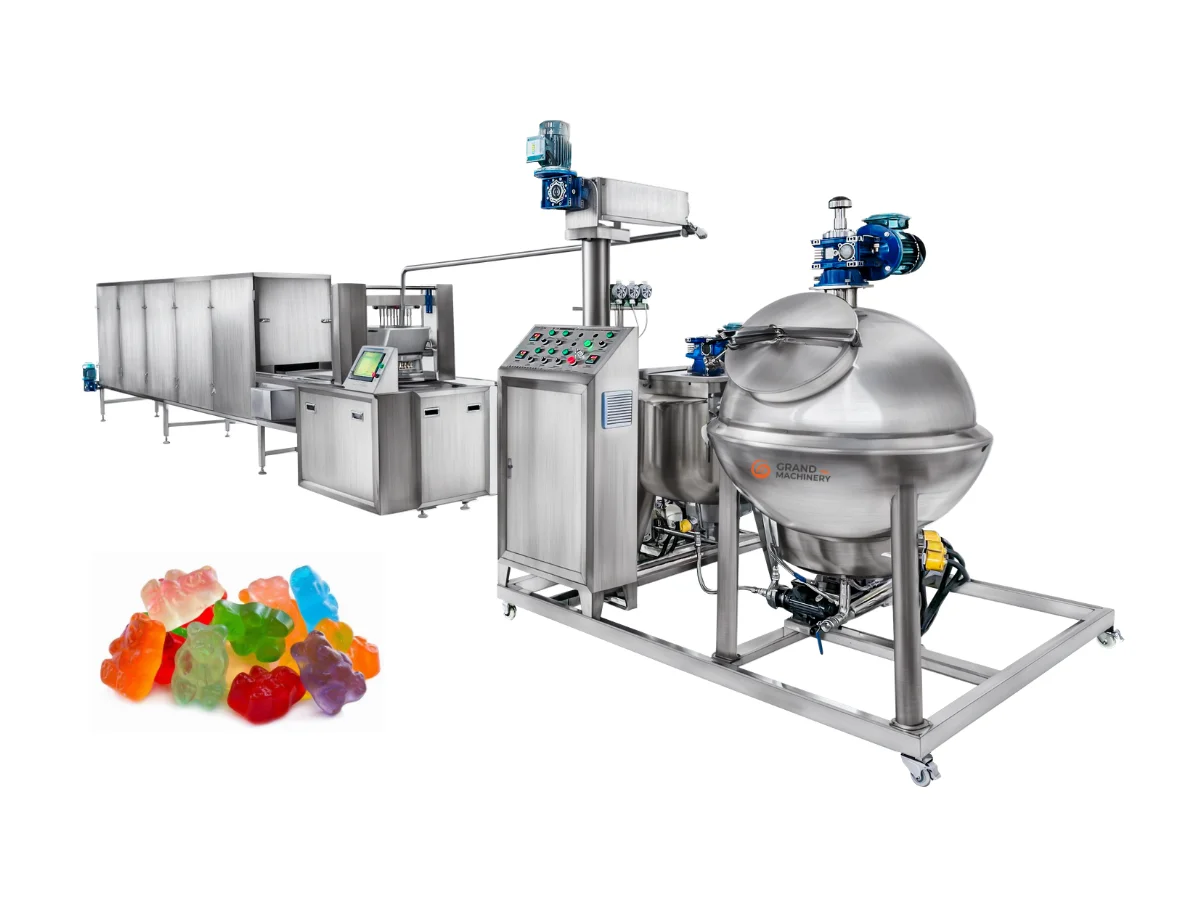
These references help frame a technical discussion. A model selection should follow the intended recipe and process route.
| Model | Published product positioning | Useful starting point |
|---|---|---|
| GM150 | Gelatin gummy depositing line | Gelatin gummy projects requiring coordinated cooking, depositing and cooling |
| GM300 | Pectin gummy depositing line | Pectin projects requiring review of cooking, dosing, depositing, cooling and demoulding |
| GM1250 | Starch mogul gummy depositing line | Projects based on a starch forming route and its associated handling requirements |
The GM150 gelatin gummy depositing line is described with PLC control and servo-driven depositing. The GM300 pectin gummy depositing line is presented as an integrated pectin production system.
The GM1250 starch mogul line lists 1,000 kg/h capacity, 105 kW power and an 820 × 400 × 56 mm starch tray size in its published specification. Use those stated values when comparing the published model; agree the recipe, operating conditions and acceptance criteria for the actual project in writing.
How PLC and Servo Control Affect Gummy Depositing
A PLC can coordinate a machine’s operating sequence using inputs from sensors and commands to connected equipment. In a gummy system, the relevant functions may include temperature supervision, mould movement, depositing and alarms. The exact functions depend on the supplied hardware and programme.
Servo control addresses motion. As explained in OMRON’s servo control introduction, feedback is compared with a command so that the drive can correct the motor’s movement. This principle helps explain controlled depositing strokes and synchronised motion; it is not evidence that a particular controller brand is installed in a specific gummy machine.
Motor position feedback is also different from checking the mass of each finished gummy. Product consistency depends on the material, temperature, flow path, depositing settings and subsequent process. Ask how the supplier measures deposit-weight variation during a trial and which conditions are recorded. If a particular PLC, servo brand, data interface or recipe-management function is required, include it explicitly in the agreed equipment specification.
A Practical Supplier Qualification Workflow
Use the same approval sequence for every shortlisted supplier. The activity diagram below shows a purchasing workflow, with a review step when a sample trial does not meet the agreed requirements.

1. Prepare a common requirements sheet
Include the gelling system, target piece weight and shape, product varieties, normal production schedule and required finished output. State whether the target is a depositing rate or packed, saleable product per shift. Identify the utilities and floor space available at the installation site.
2. Compare a complete scope of supply
Ask each supplier to mark included equipment, optional items and customer-supplied services. Cover cooking, ingredient addition, moulds, cooling or conditioning, finishing, cleaning equipment and packing interfaces. Record the operator tasks and the responsibilities of each supplier.
3. Agree a representative product trial
Define the formulation, trial duration and sampling method. Review deposit-weight consistency, shape, release, texture and the agreed handling characteristics. Record stops, waste, cleaning and changeover requirements alongside the successful running conditions. A short demonstration and a sustained production acceptance test answer different questions.
4. Review utilities, access and service
Obtain the proposed layout and utility schedule. Check maintenance access, equipment delivery routes, mould storage and cleaning arrangements. Clarify installation support, training, spare parts, warranty terms and response arrangements in the written proposal. Do not substitute a general service statement for the support actually included in your purchase.
5. Confirm downstream packing separately
Finished gummies must be compatible with the intended handling and pack format. Define bottles, pouches or another format early enough to review the interfaces. Grand Machinery’s packaging equipment solutions provide a starting point for that discussion; equipment suitability should be assessed with the actual product and packaging materials.
What Drives the Cost of a Gummy Machine?
There is no useful single price for every “gummy machine.” The purchase scope may range from a depositor to a production line with cooking, mould circulation, finishing and packing equipment.
Compare quotations using the same assumptions:
- Required process route, output and level of automation.
- Number of mould sets, product formats and changeover requirements.
- Cooking, cooling, conditioning and finishing equipment included.
- Control functions, documentation and agreed acceptance testing.
- Installation, training, shipping, spare parts and site preparation.
Then compare operating requirements, including labour, cleaning time, utilities and consumables. A lower initial machine price can describe a smaller scope rather than a lower cost for the same production result. Ask suppliers to separate the base equipment, options and project services so that differences are visible.
Frequently Asked Questions
Which gummy machine manufacturer is best?
The best fit depends on the product and the required process. Compare suppliers that can address your recipe, scale and equipment scope, then use a documented trial and a written proposal to make the selection. This shortlist does not establish a universal winner.
Can one gummy machine make both gelatin and pectin gummies?
Some systems may be configured for both, but suitability should be confirmed for the proposed machine and formulations. Review cooking, holding, ingredient addition, depositing, setting and cleaning requirements. A general “gummy” label is not enough to confirm compatibility.
Does starchless production eliminate drying?
Not automatically. Starchless describes forming in reusable moulds. Subsequent cooling or conditioning depends on the recipe and the process supplied. Ask the supplier to demonstrate the complete route needed to reach the agreed finished-product condition.
Is a depositor’s hourly output the same as a line’s output?
No. Cooking, cooling, conditioning, handling, finishing and packing can each affect usable output. Compare a defined product over a stated operating period, including the agreed treatment of stops and rejects.
What should I send with a gummy equipment enquiry?
Start with the recipe type, piece weight, shape, target output, desired pack format and installation country. Add available utilities, floor-space limits and any trial results. These details help a supplier propose a relevant scope instead of a generic model recommendation.
Discuss Your Gummy Production Project
Share your product requirements with Grand Machinery’s Grand GelGumi team to begin a review of your production needs. Include the recipe type, target output, product weight, packing format and installation country so the discussion can cover both production and downstream equipment needs.