You open the bottle for your daily dose and find a single fused mass instead of separate gummies. Gummy vitamins sticking together in the bottle comes down to heat and humidity: the sugar and gelling agents on the surface absorb moisture from the air, turn tacky, and bond on contact. The good news is that sticking is almost always a storage problem, not a manufacturing defect, and it is reversible in most cases. This guide explains why it happens, gives you four practical fixes you can apply today, and shows how the same problem is controlled on a production line before the bottle is ever sealed.
Key Takeaways
- Heat and humidity are the two main causes of gummy vitamins sticking together.
- A cool, dry location below 77°F (25°C) with stable humidity prevents most sticking.
- Sealing the bottle immediately after each use limits the moisture that causes surface tackiness.
- A food-safe desiccant packet or a light dusting of cornstarch keeps gummies from bonding.
- Mild clumping can usually be separated; visible mold, off smells, or a wet surface are signs to discard.
Why Are Gummy Vitamins Sticking Together?
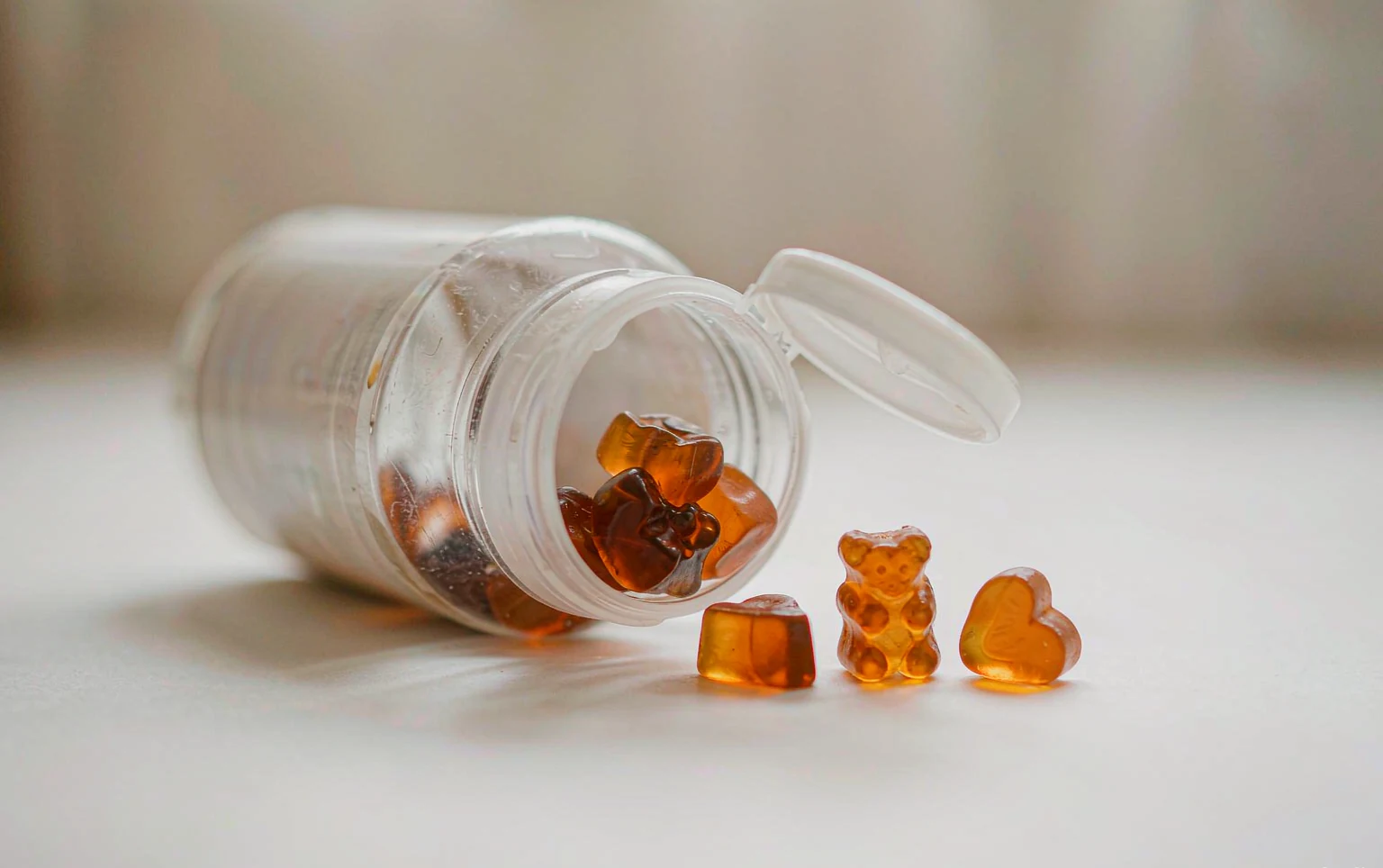
Gummy vitamins stick together when their surface becomes tacky from absorbed moisture or softened by heat. Two mechanisms are at work, and they often reinforce each other.
Moisture and Humidity: The Main Cause of Sticky Gummies
Gummies are hygroscopic, which means they actively pull water vapor out of the surrounding air. This is not a flaw; the moisture is what makes them chewy in the first place. The problem starts on the surface, where free sugars and humectants such as glycerin sit ready to bind with any water they encounter. In an environment above roughly 60% relative humidity, that surface layer stays slightly wet. Put a few hundred of these surfaces in contact inside a closed bottle, and they weld together.
The threshold matters more than most people expect. Gummy formulations typically sit at a water activity of about 0.50 to 0.65, which is close to the range where microbial growth becomes possible. That narrow margin is why manufacturers treat moisture control as a stability issue rather than a cosmetic one.
Heat and Syrup Migration on the Surface
Heat works differently. The gelling agent that gives a gummy its structure, whether gelatin or pectin, softens as temperature rises. Gelatin begins losing structural integrity around 75–80°F (24–27°C); pectin holds firm until roughly 90°F (32°C). Once the matrix softens, the gummies deform against each other under their own weight, and when the temperature drops again they fuse in whatever position they settled into.
Heat also drives syrup migration. Sugars and humectants move toward the surface, leaving a shiny, wet-looking film that is far stickier than the original texture. This is why a bottle that spent an afternoon in a warm car often looks damp inside even though nothing was spilled.
Gelatin vs. Pectin: How the Gummy Base Affects Stickiness
The base material changes how a gummy fails, not whether it can. Gelatin-based gummies fuse at lower temperatures but develop less surface tackiness in cool, humid conditions. Pectin-based gummies hold their shape at higher temperatures but are more prone to surface stickiness in humid air, because pectin is a carbohydrate that interacts more readily with moisture.
Neither base is immune, and both respond to the same preventive measures. If you are still deciding which formulation suits your product or your climate, our gelatin vs pectin comparison covers the trade-offs in formulation, texture, and heat stability in more detail. For producers working with a pectin base, the filling and curing setup itself is a variable: a pectin gummy depositing machine is configured differently from a gelatin line, partly because pectin’s higher setting temperature changes how the deposit must be cooled and cured.
Tip 1: Store Gummy Vitamins in a Cool, Dry Place
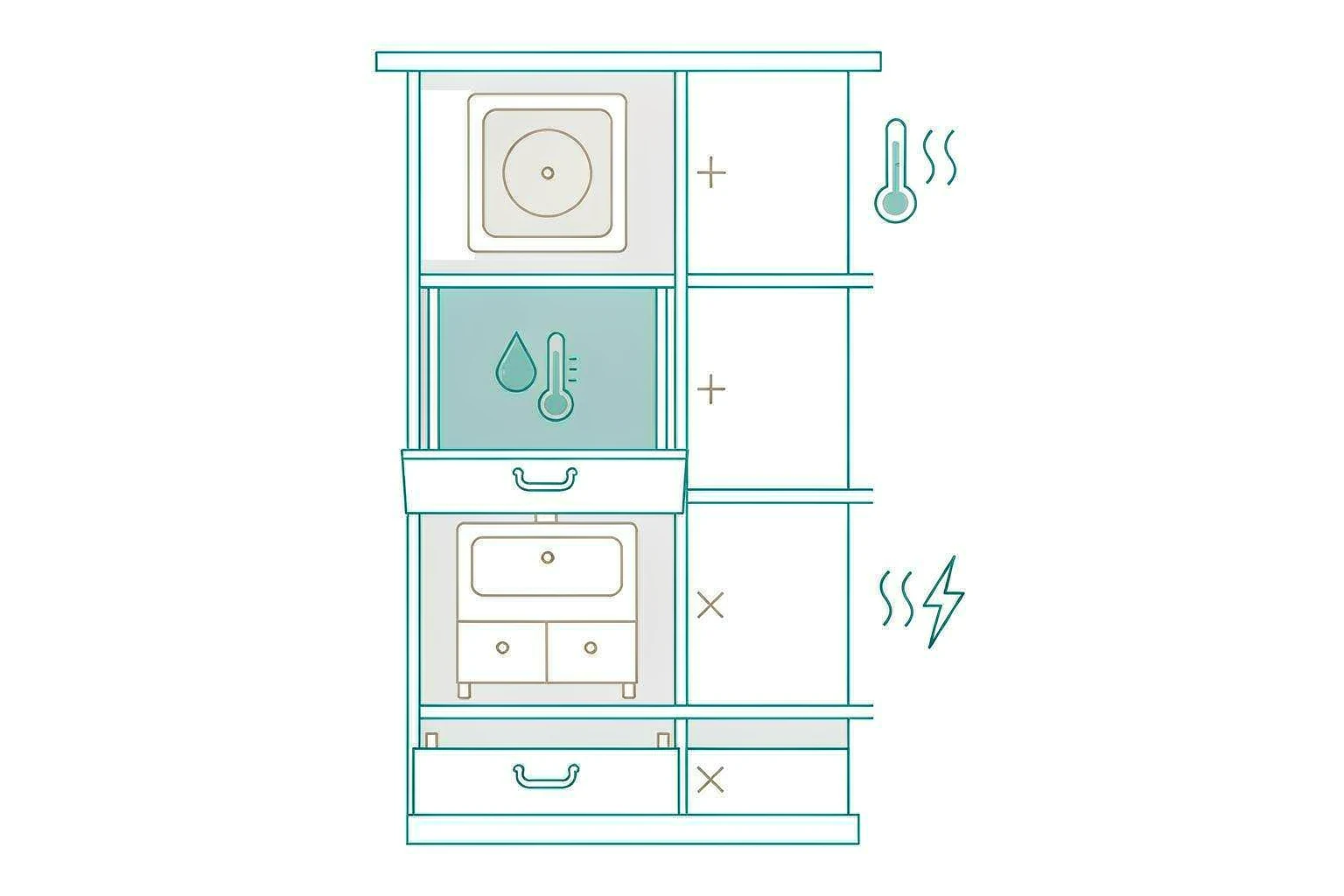
Store gummy vitamins in a dark, dry cabinet with a stable temperature below 77°F (25°C) and humidity under 60%. This single change eliminates the majority of sticking problems, because it removes both drivers at once.
Ideal Temperature and Humidity Levels
Aim for a location that stays between 60–77°F (15–25°C) year-round with minimal fluctuation. Stability matters as much as the absolute number: repeated swings between warm and cool cause condensation to form inside the bottle, which reintroduces moisture even when the average temperature looks acceptable. A bedroom dresser drawer or a pantry shelf away from appliances usually meets these conditions. If your home lacks air conditioning in summer, a refrigerator becomes the better option for the hottest weeks.
Storage Spots to Avoid in Your Home
Some of the most common storage spots are the worst possible choices. The table below compares them.
| Storage Location | Temperature | Humidity | Verdict |
|---|---|---|---|
| Bathroom cabinet | Warm, fluctuates | Very high after showers | Avoid |
| Kitchen shelf near stove | Spikes to 95–104°F during cooking | High | Avoid |
| Windowsill | 10–15°F above room temperature | Moderate | Avoid |
| Car or garage | Can exceed 140°F in summer | Variable | Never |
| Bedroom dresser drawer | Stable 60–77°F | Low | Recommended |
| Pantry shelf, away from appliances | Stable | Low | Recommended |
The bathroom deserves special mention because it is the most popular and the most damaging choice. A single hot shower can push bathroom humidity to 90–100%, and a supplement bottle left on the counter absorbs that moisture every morning.
Tip 2: Seal the Container Tightly After Every Use
Replace the cap immediately after every dose, and keep gummies in their original container. Every minute the bottle stays open is a minute of humid air entering a space that was designed to be dry. On a packaging line, the same principle is enforced mechanically: a capping machine tightens each closure to a consistent torque, because a cap that looks closed but sits a fraction loose lets humid air in with every cycle.
Why Air Exposure Speeds Up Clumping
Opening the bottle exchanges the dry air inside for room air. If the room air carries moisture, the gummies begin absorbing it within minutes. The effect compounds over weeks: each opening adds a little more water, and the surface tackiness increases gradually until the gummies start bonding. Leaving the bottle open on the counter while you take your dose, or transferring gummies into a decorative jar that does not seal, accelerates this process dramatically.
Choosing the Right Container for Gummy Vitamins
If the original bottle is damaged or you need a smaller container for travel, choose an airtight, opaque vessel with a tight-fitting lid. Glass jars transfer temperature changes more slowly than plastic and hold a more stable internal environment. Add a food-safe desiccant packet to any replacement container. The detailed criteria for choosing packaging for gummies, including barrier materials and closure types, are covered in our packaging guide. Buying in smaller quantities that match your usage window also helps, since a 30-day supply spent in a sealed state has less exposure than a 90-day bottle opened daily.
Tip 3: Add a Food-Safe Desiccant or Dusting Agent
A desiccant packet or a light dusting of food-grade cornstarch absorbs surface moisture before it can cause bonding. Both approaches are used commercially, and both work at home with inexpensive materials.
Silica Gel Packets vs. Cornstarch Dusting
| Method | How It Works | Best For | Notes |
|---|---|---|---|
| Silica gel desiccant packet | Absorbs ambient moisture inside the closed container | Ongoing prevention in a sealed bottle | Leave the manufacturer’s packet in place; replace roughly every 30 days |
| Food-grade cornstarch | Coats the surface and absorbs residual moisture | Gummies that are already slightly tacky | A pinch is enough; shake gently to coat evenly |
| Carnauba wax or oil glazing | Creates a hydrophobic barrier on each piece | Commercial production | Requires tumbling equipment |
Do not throw away the small packet that comes inside a new vitamin bottle. It is the first line of defense against humidity, and it keeps working until the last gummy is gone. Note the distinction, though: a desiccant manages moisture, but it cannot reverse a gummy that has already melted and re-fused.
Tip 4: Unstick Clumped Gummy Vitamins the Right Way
Most clumped gummy vitamins can be separated safely. The method depends on how far the process has gone, so match your approach to what you actually see in the bottle.
Quick Methods to Separate Stuck Gummies
Use the mildest method that works, and stop when the gummies separate.
- Lightly clumped (2–4 gummies): Let the bottle sit at room temperature for 30 minutes if it arrived warm, then apply gentle pressure with clean, dry fingers. Body heat softens the bond point and the gummies usually pull apart cleanly.
- Solid block: Refrigerate the bottle for 20–30 minutes. Cold firms the matrix and makes the fused points brittle, so the block breaks apart with less tearing. Do not freeze; ice crystal formation damages the gummy structure.
- Surface tackiness without fusion: Add a food-safe desiccant packet and keep the lid closed. The surface dries out over a few days.
- Transferred to a new container: Move the gummies to a small glass jar with a tight lid and a desiccant, then store it in a cool, dark spot.
If you would rather work with gummies in a different form entirely, melting gummies into liquid is a separate process with its own considerations and is covered in its own guide. For a bottle that has simply gone stale rather than sticky, our article on gummy candy shelf life and storage explains how texture and flavor change over time.
What to Look For Before Deciding to Keep or Discard
Separating gummies is normally a matter of texture rather than chemistry. Before you decide what to do with the bottle, check for these specific signs:
- Visible mold — white, green, or fuzzy spots on the surface. Discard the bottle.
- Off smell — a sour, sharp, or chemical odor instead of the expected fruit scent.
- Wet or slimy surface — not merely tacky, but genuinely wet, which indicates significant moisture penetration.
- Significant discoloration — darkening or bleaching beyond normal batch variation.
- Uneven texture throughout — some pieces rock-hard, others unusually soft.
If any of these are present, or if a melted bottle cannot be separated into pieces of consistent size, the practical choice is to replace the bottle rather than guess at the correct serving. When in doubt, check the label’s storage instructions and consult a pharmacist or healthcare provider for guidance specific to your product.
Why Is My New Bottle Already Sticky? The Summer Shipping Problem
A bottle that arrives sticky has almost certainly spent time in a hot delivery vehicle or shipping container. This is the most common scenario consumers report, and it is worth understanding because it is not a sign of a bad batch.
What Delivery Trucks and Ocean Containers Do to Gummies in Summer
A closed car interior in summer sun easily exceeds 140°F (60°C). A delivery truck trailer or a metal shipping container can reach 110–130°F (43–54°C) during peak summer months, well above the temperature at which gelatin softens and pectin begins to lose structure. Ocean freight is especially exposed, because containers hold heat for long periods and transit times are measured in weeks.
The damage pattern is predictable. Gummies soften during the hot part of the day, press against each other under their own weight, and re-fuse as the container cools overnight. The bottle then passes through several more temperature cycles in a warehouse, a retail back room, and the final-mile vehicle before it reaches your door. By the time you open it, the gummies have been through a series of soften-and-set events.
What you can do on arrival: let the bottle return to room temperature indoors for 30 to 60 minutes before opening it. Opening a warm bottle traps humid air inside as it cools, which makes the sticking worse. If the gummies are already fused, the refrigeration method in Tip 4 is the appropriate first step.
Heat-Stable Formulas and Barrier Packaging in Warm Climates
For brands selling into hot or humid markets, shipping stability is a formulation and packaging decision, not a customer-service problem. Three levers matter most:
- Gelling agent and water activity. Pectin systems can be engineered to a lower final moisture content than standard formulations, which reduces the moisture gradient between the product and humid outside air.
- Surface coating. A controlled application of carnauba wax or a comparable food-grade coating creates a hydrophobic layer that slows moisture transmission considerably compared with a light cosmetic oil coat.
- Packaging barrier. Multilayer barrier bottles, foil liners under the cap, and properly sized desiccant canisters outperform a standard HDPE bottle, where moisture migrates slowly through the plastic wall itself.
None of these are afterthoughts; they belong in the stability plan before the first production run. If you are developing a gummy supplement for warm or humid markets, discuss your production requirements with Grand Machinery so that climate exposure is designed into the formula and the line, not discovered in the warehouse.
Where Sticking Really Starts: 4 Production Checkpoints Before the Bottle
Consumer advice treats sticking as a storage issue because that is what the consumer can control. In reality, whether a gummy resists sticking at all is largely determined before the cap goes on. Four checkpoints on the production line decide it.

Depositing and Curing: Removing Surface Moisture Early
After the gummy mix is deposited into molds, the pieces must cure under controlled temperature and humidity. This step removes excess surface moisture and sets the final texture. If curing is shortened to increase throughput, residual surface moisture stays in the product and becomes the seed of every clumping complaint that follows. Production areas for cooling, demolding, and packaging are typically held at 30–45% relative humidity for exactly this reason.
A gummy depositing machine handles the filling accuracy, but the curing stage that follows determines whether the output is stable. On a full gummy depositing line, the curing tunnel and its climate control are sized together with the depositor, because a mismatch between fill rate and curing capacity is one of the most common sources of sticky output. For producers running gelatin formulations at scale, a configured line such as the GM150 gelatin gummy depositing line bundles depositing with the cooling and curing stages that follow it.
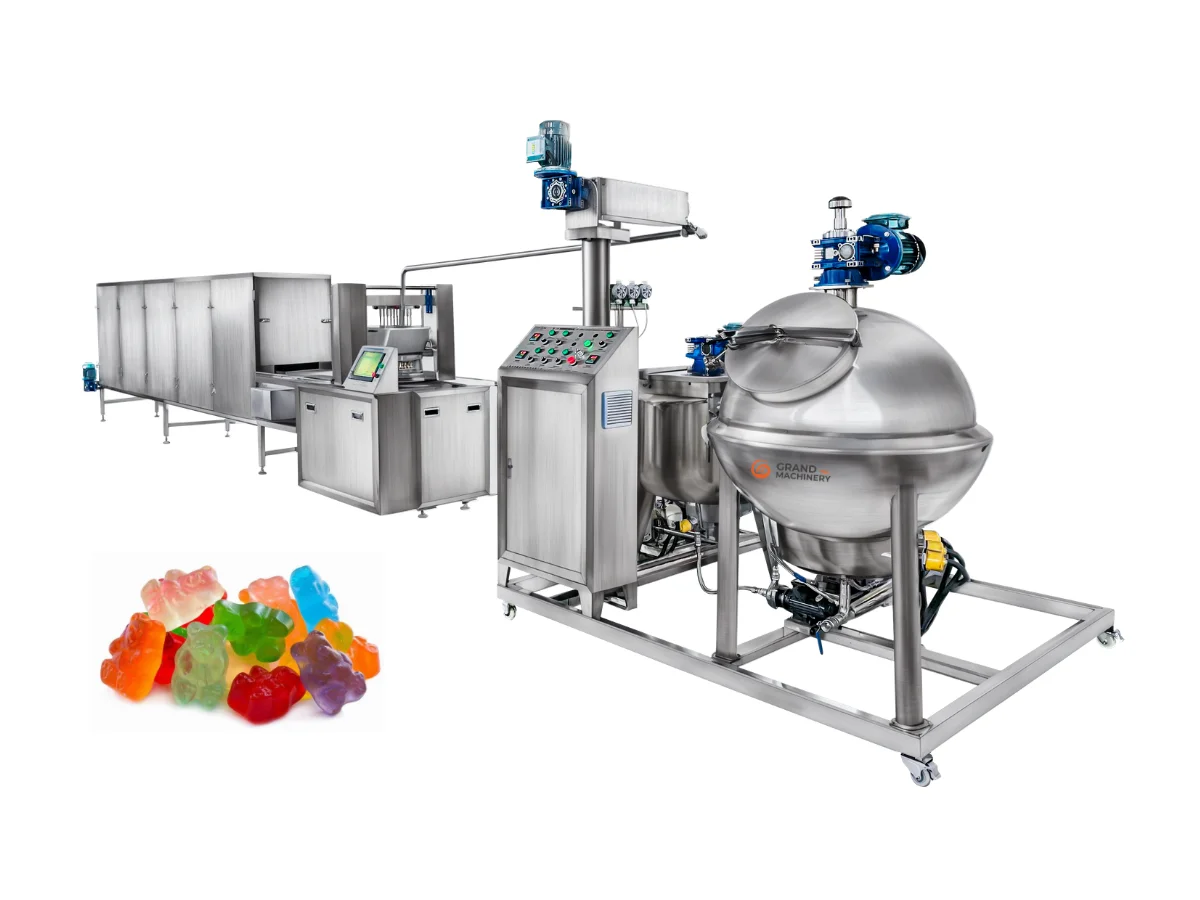
Cooling, Demolding, and Glazing: Building the Anti-Stick Barrier
Once cured, gummies pass through cooling and demolding, then receive a surface treatment. This is where the anti-stick barrier is physically created. A light dusting with a citric acid and sugar blend, a modified starch powder, or a controlled oil or wax coating separates each piece and slows moisture pickup during storage.
Application consistency matters more than the choice of agent. Too little coating leaves the surface exposed; too much affects taste and texture. A tumble dryer used for drying and coating applies these agents evenly across the batch; in softgel and gummy production the equivalent drying stage is often handled by a ZL200S double layer intelligent tumbler dryer, which monitors temperature and humidity per drying unit rather than treating the batch as a single block. For sugar-coated and polished products, a gummy coating machine controls film thickness and distribution so that every piece receives the same protection; the BG series includes integral high efficiency coating machines for smaller batches and intelligent models for higher throughput.

Counting, Bottling, and Induction Sealing: Protecting the Product
The final checkpoint is the packaging line itself. Three details decide whether the work done upstream survives the shelf:
- Desiccant insertion at the bottling stage, so the moisture barrier is present from the moment the cap goes on. On automated lines this is handled by a dedicated inserter, such as the SHG200 automatic desiccant inserter, which drops a measured packet into each bottle mouth at up to 100 bottles per minute.
- Induction sealing of the bottle mouth, which provides a genuine barrier under the cap rather than relying on the closure alone.
- Controlled filling environment, since gummies left exposed on an open line absorb ambient moisture before the bottle is sealed.
An automated counting and bottling line integrates counting, desiccant insertion, capping, and sealing into one sequence, which reduces the window in which finished product sits exposed. The individual machines in that sequence are also available separately, from electronic counting machines through to bottle capping and sealing units, so a line can be built or upgraded in stages. For brands receiving complaints about clumping in warm markets, this is usually the first place to look after the curing stage.
If you are seeing sticking problems after production has started, contact our technical team to discuss your production requirements and we can review where in the process the issue is most likely originating.

Frequently Asked Questions

Why do gummy vitamins clump in the bottle?
Clumping happens when surface moisture makes individual gummies tacky enough to bond on contact. The usual causes are high ambient humidity, warm storage conditions, insufficient curing during production, or a weak surface coating. Once several pieces bond, the clump holds together because the contact points have partially fused.
Can I refrigerate gummy vitamins to stop them sticking?
Short-term refrigeration is useful as a separation method rather than a storage strategy. Chilling the bottle for 20–30 minutes firms the matrix and makes a fused block easier to break apart. For routine storage, a refrigerator is generally not recommended unless the label instructs it, because condensation forms inside the container each time it is opened and returns to room temperature.
What should I do with gummy vitamins that are stuck together?
Separating them is usually a matter of texture rather than chemistry. Work with clean, dry hands, use gentle pressure on lightly bonded pieces, and refrigerate a solid block briefly if needed. Before using them, check the surface for visible mold, an off smell, or a wet slimy feel, and compare the pieces against the normal appearance of the product.
How can I tell if sticky gummy vitamins should be discarded?
Look for changes that go beyond surface stickiness: mold growth, a sour or chemical odor, a genuinely wet rather than tacky surface, or pronounced discoloration. A bottle that has melted into one mass with no way to portion it evenly is also a practical reason to replace it. Shelf-life details for gummy products are covered in our guide to gummy candy shelf life and storage.
How do manufacturers prevent gummy vitamins from sticking together?
Manufacturers control four things: formulation (gelling agent, sweetener system, and water activity), the curing or drying stage that removes surface moisture, a surface coating or glazing step that creates a moisture barrier, and packaging with desiccants and induction seals. Sticking is treated as a stability property designed into the product, not a defect to be corrected after the fact. Our page on choosing packaging for gummies outlines how the packaging side of this works.
Conclusion: Keep Your Gummies Fresh and Separate
Gummy vitamins sticking together comes down to two causes: moisture absorbed from the air and heat that softens the gummy matrix. Both are manageable with the same four habits. Store the bottle in a cool, dry place below 77°F (25°C), seal it immediately after every use, keep a desiccant packet inside, address mild clumping with the mildest method that works, and inspect the surface before using a clumped bottle. These habits follow the same guidance the NIH MedlinePlus encyclopedia gives for storing medicines and supplements: keep them sealed, in a cool, dry place, away from heat.
If you buy in bulk for a business rather than a household, the same principles scale up, and the production line is where they are decided. Curing time, coating uniformity, and the barrier properties of the packaging all determine how well finished gummies tolerate the humidity and heat of their target market. Our team works with brands on that side of the problem every day, from depositing and curing through to counting, bottling, and sealing.