So, does gummy candy expire? Yes, it certainly does, but not as an immediate health danger. Most chewy treats simply undergo a gradual decline in quality over time rather than spoiling overnight. Unopened gummies stay soft and delicious for 6 to 12 months past their printed expiration date. After opening the sealed package, air exposure slowly degrades the original texture and flavor. Opened bags remain best for 3 to 6 months before becoming tough or dry. Stale pieces may feel hard to chew, but they rarely cause food poisoning. You can easily enjoy your favorite sweet snacks safely by monitoring their overall freshness.

Key Takeaways
- Unopened gummy candy stays fresh and soft for six to twelve months past the expiration date.
- High sugar levels prevent bacterial growth and keep old gummies safe from food poisoning.
- Store gummies in airtight containers inside a cool, dry pantry to protect their soft texture.
- Throw away gummy candy immediately if you see visible mold growth or smell strange odors.
1. Introduction: Does Gummy Candy Expire? Understanding Shelf Life and Freshness
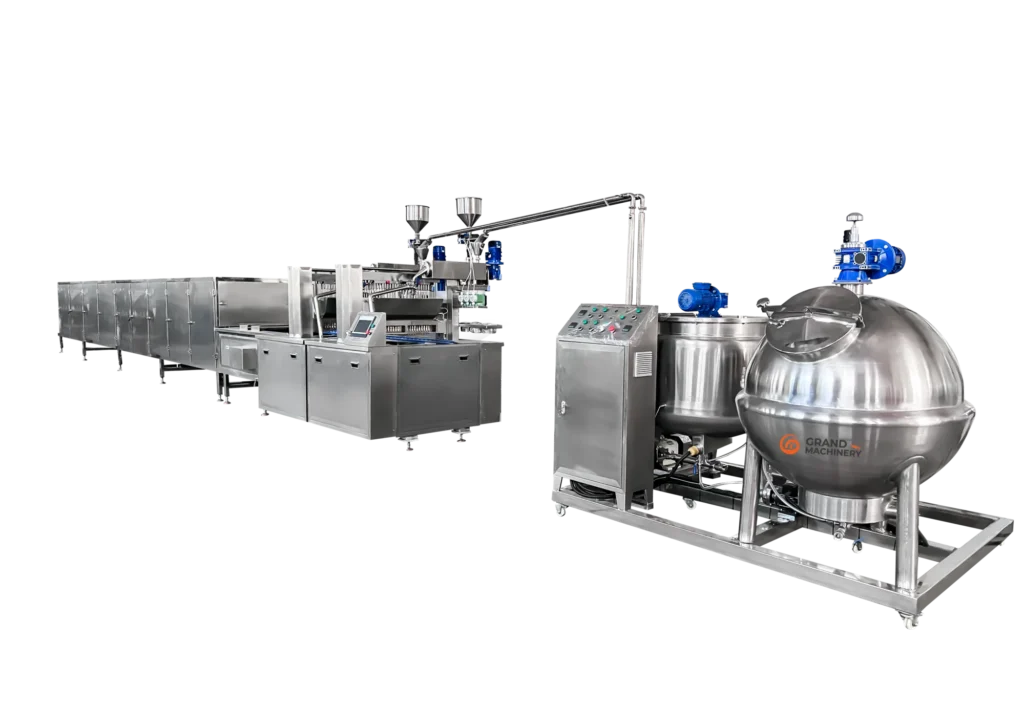
Many sweet lovers open a pantry cabinet and ask a simple question: does gummy candy expire? You might find a forgotten package of gummy bears sitting behind older kitchen food items. The printed expiration date on the bag passed several months ago. However, these chewy treats rarely spoil like fresh milk, dairy products, or soft organic produce. Standard commercial gummy candy relies on specific food science techniques to remain stable over long periods. Food manufacturers carefully balance moisture levels and sugar formulations to preserve product freshness. This precise control of moisture, texture, and shelf stability is achieved through advanced gummy manufacturing processes and production equipment.
1.1 The Common Mystery of Expired Gummy Candies
Consumers often wonder how long chewy sweets remain safe to eat. People frequently ask, does candy expire in a way that causes sudden foodborne illness? Commercial gummy candies have a naturally resilient design against biological decay and spoilage. High sugar concentration and controlled moisture levels protect these treats from rapid biological degradation. Unopened bags retain ideal eating quality for 6 to 12 months beyond the printed expiration date. Opened bags lose their soft texture much faster due to continuous environmental exposure. Exposed treats usually suffer noticeable quality loss within 3 to 6 months of direct contact with ambient air.
To understand why gummy bears resist typical food spoilage, we must examine water activity levels carefully. Water activity measures the total available unbound water inside a food product. Standard finished gummy bears maintain a water activity range between 0.55 and 0.70. Microorganisms require accessible water to multiply efficiently and cause food decay. Exceeding a water activity threshold of 0.70 accelerates product spoilage by creating a favorable environment for microbial growth. Maintaining lower water activity keeps gummy bears completely safe for extended storage without requiring heavy synthetic preservative additives in the recipe.
The high sugar content in standard commercial formulations acts as an effective natural preservative through a specific four-step biological process:
- Chemical Binding: Sugar molecules in gummy candy chemically bind to available water molecules.
- Reduction of Water Activity: This binding minimizes the amount of free unbound water within the candy.
- Inhibition of Microbial Growth: Microorganisms such as bacteria, yeast, and mold require free water to survive and multiply.
- Cellular Dehydration: Removing accessible moisture dehydrates and destroys potential biological contaminants.
Because of this natural preservative mechanism, true biological spoilage remains extremely rare for sealed gummy bears. Instead, quality loss usually appears as simple physical staleness or altered chewy consistency. Continuous air exposure gradually causes moisture evaporation from the gelatin matrix inside the candy. The original soft chew transforms into a hard, tough consistency over time. Alternatively, humid storage environments cause gummies to absorb excess surrounding moisture from the ambient air. This extra moisture creates unpleasant surface stickiness, partial melting, and clumping between individual pieces. When asking does gummy candy expire, recognizing the difference between mere staleness and actual food safety risks allows sweet lovers to enjoy their treats with total confidence.
2. What Does the Expiration Date on Gummy Candy Mean?
2.1 Quality Decline vs. Food Safety
Food manufacturers print an expiration date on commercial sweet packages to indicate peak product quality. Consumers often wonder, does gummy candy expire when this stamped code passes? This printed label represents a best-by recommendation rather than a strict safety deadline. Food manufacturers establish these specific freshness dates through rigorous, controlled shelf-life testing. They carefully measure how texture, flavor, and color degrade under standard storage conditions over long periods. A package past its printed date usually remains completely safe for consumption. However, the commercial manufacturer no longer guarantees the ideal soft chewiness or vibrant fruit flavor after this calendar point passes.
Understanding the distinction between freshness loss and biological contamination helps consumers prevent unnecessary food waste. Traditional candy expiration rarely involves harmful bacterial hazards or sudden foodborne illness risks. Instead, physical changes define the gradual quality decline of aging sweets. Fresh gummy bears feature a flexible gel matrix that holds internal moisture uniformly. Over extended storage periods, water slowly escapes through the plastic packaging into surrounding ambient air. This continuous moisture loss causes old gummy bears to harden significantly. Hardened treats become difficult to chew comfortably, yet the physical product expiration date remains a sensory quality issue rather than a health risk.
In contrast, true food spoilage poses actual health risks through mold growth or chemical rancidity. High sugar levels protect gummy candy from immediate microbial attack. Mold spores only multiply if liquid water accumulates directly on the soft surface. Extreme environmental humidity or sudden temperature changes can trigger this surface moisture pooling. Most sealed packages of gummy bears simply experience harmless texture changes instead of biological spoilage. Unless visible mold appears or an unpleasant odor develops, eating an older piece remains entirely safe for human consumption.
3. A Calendar for Candy: The Real Shelf Life of Gummy Treats
3.1 Unopened Commercially Sealed Gummies
Commercial gummy candies generally remain fresh for 6 to 12 months when kept in a cool, dry environment. Their elevated sugar concentration serves as a natural preservative to slow down degradation. Many buyers ask how long do gummies last in standard pantry storage. Unopened bags protect the soft interior from ambient air and moisture changes.
Storage conditions directly impact the shelf life of gummy bears. Proper storage prevents early melting and hardening.
| Storage Environment | Estimated Shelf Life |
|---|---|
| Pantry (Room Temperature) | 6 to 8 months |
| Refrigerator | 6 to 8 months |
| Freezer | 12 months |
3.2 Opened Packages
Opening a sealed bag exposes the inner treats to atmospheric air. Continuous oxygen exposure reduces overall candy shelf life. Unsealed items slowly lose internal water content to surrounding air.
Texture changes signal physical aging. Exposed gummy bears lose their soft stretchiness over time. Stored treats become tough and hard, but eating aging gummy bears stays completely safe.
3.3 Homemade Gummy Candies
Kitchen cooks frequently prepare fresh treats without industrial additives. Homemade gummy candies and edibles typically possess a brief shelf life of roughly one week. Certain batches may remain good for up to one month depending on the specific preparation.
Refrigeration protects fresh recipes from quick mold growth. Natural ingredients lack strong synthetic stabilizers. Cold air maintains proper firmness and preserves flavor quality.
3.4 Special Varieties: Sour Gummies and Medicated Edibles
Acidic sugar coatings attract environmental humidity rapidly. Moisture changes create sticky surface liquids on sour gummy bears. Absorbed water degrades outer coatings faster than plain recipes.
Infused treats require careful monitoring of active ingredients. THC potency degrades predictably over time:
- Initial Degradation Rate: THC decreases by roughly 12% within the first 100 days of being stored.
- Ongoing Degradation Rate: Potency continues to decline at a rate of 3% to 4% every month following the initial period.
- Effect on Expiration: Active ingredient breakdown directly diminishes product efficacy, establishing a total shelf life usually spanning 6 to 24 months based on storage environment and added preservatives.
Active infused gummies lose strength, while standard chewy gummy bears lose physical texture over time.
4. How to Tell If Gummy Candy Has Gone Bad? (Signs of Deterioration)
4.1 Dramatic Texture Changes (Hardening and Crystallization)
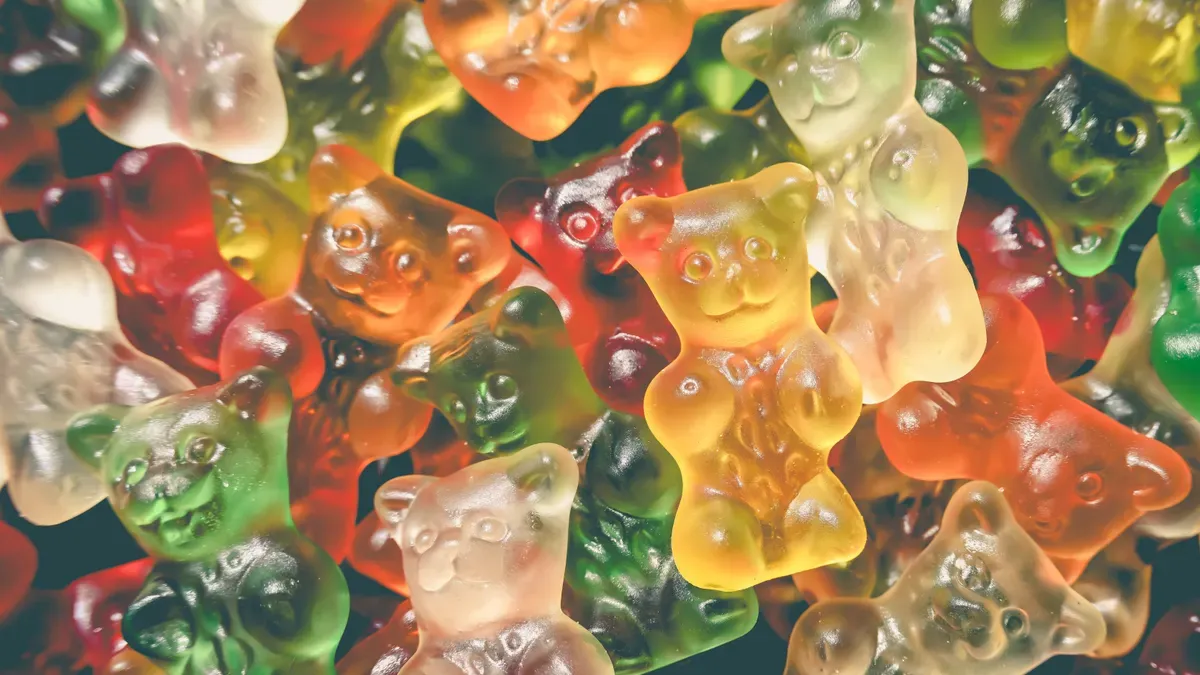
Identifying signs of expired candy begins with checking overall firmness. Unopened gummy candy relies on gelatin or pectin matrices to hold internal moisture. Continuous air exposure causes bound water to evaporate into surrounding room space.
The loss of water turns elastic treats rock-hard over time. Dried gummy bears become difficult or uncomfortable to chew. Sugar molecules form hard crystals on outer surfaces, creating an unpleasant gritty texture during eating.
4.2 Surface Moisture and Stickiness
Ingredients like sugar and corn syrup naturally pull water from surrounding environments. Storage conditions exceeding 60% relative humidity force ambient water vapor directly into individual treats. This process causes surface sweating, liquid release, and sticky clumping between treats.
Inadequate packaging accelerates external moisture exchange over extended periods. Water moves from high ambient humidity toward areas of lower water activity inside candy structures. Storing gummies in sealed airtight glass jars or resealable bags protects them from atmospheric air exposure and prevents sticky degradation.
4.3 Faded Colors and Loss of Aroma
A clear visual indicator for detecting spoiled candy involves observing color loss. Direct sunlight breaks down delicate food dye compounds in exposed gummy bears. Storing sweets near warm kitchen appliances accelerates product fading and dulls original vibrant colors.
Flavoring compounds and essential oils degrade over long storage periods. Natural fruit oils undergo oxidation, which causes musty or sour smells. Stale gummy bears lose their distinct fruity smell near their printed expiration date.
4.4 Visible Mold: When to Discard Immediately
True biological contamination requires immediate disposal to protect safety. Fungal spores germinate when high ambient moisture combines with warm room temperatures. Mold appears as fuzzy white growths, dark spots, or unusual discolored patches across surfaces.
Eating moldy treats poses real health risks. Consumers must discard bags showing visible fungal growth immediately after inspection. Keeping sweets in cool, dark pantry locations past their printed expiration helps maintain overall safety, and understanding candy expiration ensures proper kitchen management.
5. Key Factors That Affect Gummy Shelf Life
5.1 Storage Temperature and Heat Exposure
Warm environments quickly alter soft treats. Gelatin starts to lose its firm structure and melt when stored in ambient conditions exceeding 20°C to 25°C (68°F to 77°F), as higher temperatures cause the underlying protein networks to loosen. High temperatures cause individual pieces to fuse into a single blob.
Heat breaks down the chewy texture of classic gummy bears. Storage near hot appliances speeds up melting without creating food safety hazards.
5.2 Humidity Levels and Moisture Migration
Moisture in room air alters candy texture. Soft sweets absorb water vapor in humid spaces, making surfaces sticky.
Dry air pulls moisture from the interior. Internal water escapes over time, which hardens old gummy bears before their printed expiration date.
5.3 Packaging Integrity and Airtight Sealing
Airtight packaging protects treats and extends candy shelf life. In commercial production, manufacturers often use automated gummy packaging machines to ensure accurate filling, sealing, and long-term product protection.
- Multi-Layer Structure: Mylar utilizes a composite design (such as PET/AL/PE or BOPP/VMPET/PE) incorporating aluminum foil or metallized film layers.
- Significantly Reduced Permeability: The specialized barrier layer lowers the Oxygen Transmission Rate (OTR) to virtually zero, preventing external air ingress far more effectively than standard plastics.
- Conformal Protection & Oxidation Prevention: The packaging closely encapsulates the gummies to eliminate residual air gaps, shielding the product from oxidative damage.
- Integrated Sealing Features: It can be combined with oxygen absorbers and tight seals/zippers to maintain a low-oxygen environment over extended periods.
Tight seals preserve product freshness. Damaged bags allow oxygen entry, accelerating flavor loss.
5.4 Ingredients and Manufacturing Process
The primary ingredient in a gummy candy influences heat resistance. Testing under high-temperature shipping conditions (40°C) confirms that plant-derived pectin formulations deliver superior thermal resistance compared to gelatin, maintaining structural integrity at significantly elevated temperatures when properly optimized.
| Property | Gelatin-Based Gummies | Pectin-Based Gummies |
|---|---|---|
| Gel Mechanism | Forms thermo-reversible gel | Forms non-thermo-reversible gel |
| Melting Threshold | Melts around 35°C to 40°C | Retains shape under elevated heat |
| Chemical Composition | Animal protein | Plant-derived polysaccharide |
| Shelf-Life & Storage | Prone to hardening or clumping | Offers longer shelf life |
Pectin enables fruit-flavored gummy bears to withstand warm temperatures. Recipe choices dictate overall product stability.
6. Best Practices: How to Store Gummies for Maximum Freshness
6.1 Ideal Pantry Conditions (Cool, Dark, and Dry)
Proper candy storage begins with choosing an optimal location inside your home. Sunlight and heat quickly warm sweet treats through their plastic packaging. Excessive ambient heat causes standard soft candy to soften, melt, and fuse into a single solid blob. Dark kitchen pantries shield delicate ingredient formulations from direct light exposure.
Consistent temperature stability preserves original chewiness over long periods. Keeping your pantry cool prevents the internal gel structure from loosening and collapsing. Dark storage shelves block bright light rays from fading vibrant food dyes. Dry cabinet conditions protect soft gummy bears from absorbing excess moisture from the air.
6.2 The Importance of Airtight Containers
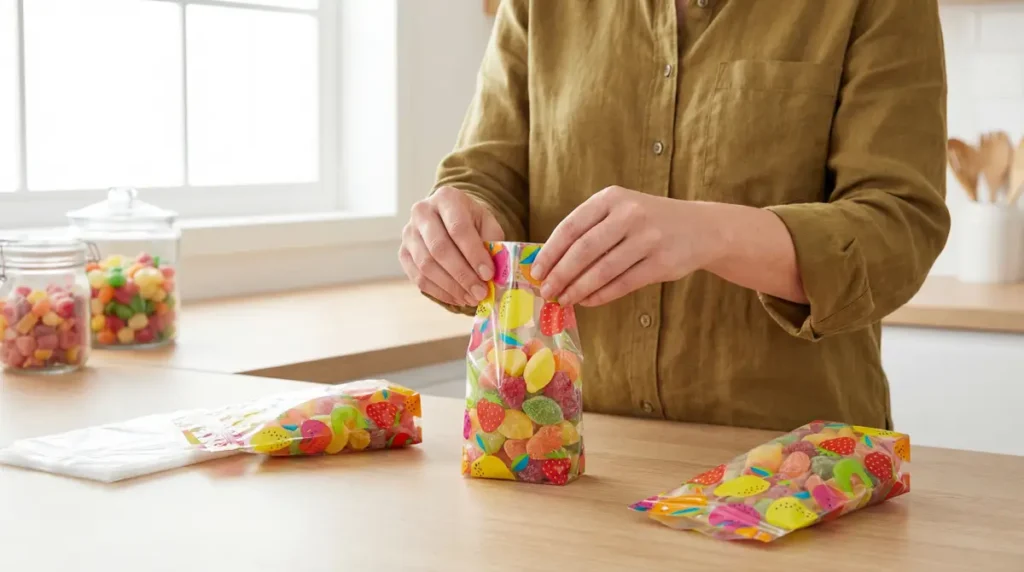
Airtight containers protect stored treats from continuous atmospheric exposure. Opening a commercial bag permits ambient oxygen to interact with the candy immediately. Unsealed packaging allows natural internal moisture to evaporate into surrounding room air. Sealed glass storage jars and heavy zipper bags lock in necessary internal water content effectively.
Sealed storage vessels maintain peak freshness for many months after opening. Preventing constant airflow stops sugar molecules from pulling excessive water vapor out of humid room air. Tight seals preserve original natural flavor oils and stop outside kitchen odors from contaminating sweet treats. Secure packaging keeps chewable snacks delightfully soft and clean.
6.3 Should You Refrigerate or Freeze Gummies?
Cold storage environments offer extended options for keeping traditional gummy bears firm. Refrigeration helps maintain original product shapes during hot summer weather conditions. Cold refrigerator air draws surface moisture away and temporarily hardens individual pieces. Bringing chilled treats back to room temperature slowly restores their soft texture before consumption.
Freezing classic gummy bears extends total storage life up to twelve months safely. Place your gummies inside heavy freezer bags to prevent unwanted ice crystal formation. Thawing frozen sweets slowly on your kitchen counter recovers their original flexible consistency. Smart temperature management safeguards overall freshness and flavor quality for extended enjoyment.
7. Industrial Perspective: How Manufacturers Extend Gummy Shelf Life
7.1 Moisture Control During Gummy Production
Commercial confectioners use precise drying steps to preserve chewy treats. Moisture regulation begins during the initial molding phase. These processes rely on integrated gummy production systems that combine cooking, depositing, drying, and packaging operations.
- Conditioned Starch Preparation: Gelatinous candy mixture is deposited into trays lined with conditioned starch beds that pull excess moisture directly from the liquid gel.
- Climate-Controlled Drying: Trays are transferred into specialized drying rooms equipped with HVAC systems that maintain strict relative humidity (35–40%) and ambient temperatures below 80°F.
- Active Air Drying Systems: Forced-air currents and drying belts allow adjustable settings to systematically lower moisture content to targeted levels.
Facility engineers establish ambient conditions around 70°F (21°C) alongside a 40% relative humidity target. Specialized HVAC units with 100% make-up air systems supply conditioned air to blending areas. Automated monitoring tracks humidity levels in real time. Proper drying ensures standard gummy bears retain ideal texture.
7.2 Advanced Packaging Solutions for Longer Shelf Life
Commercial packaging plays a key role in protecting freshness over long periods. Modern machinery seals products immediately after drying to limit environmental exposure.
Industrial lines utilize nitrogen flushing by injecting inert nitrogen gas into the package prior to sealing to displace ambient oxygen. This gas displacement prevents oxidation, color fading, and flavor loss. Reducing moisture exposure prevents sugar crystallization and stickiness. Nitrogen flushing creates an inert atmosphere that blocks mold and bacterial growth. This process extends gummy candy shelf life by an additional 3 to 8 months.
7.3 Quality Control in Commercial Gummy Manufacturing
Quality control teams continuously test batches to prevent early degradation. Technicians measure water activity levels to ensure items remain safe from spoilage.
Engineers inspect seal integrity to verify airtight packaging. Controlled factory conditions prevent defects before shipments reach store shelves. Consumers asking how long does gummy candy last or do gummy bears expire benefit directly from these rigorous standards. Stamped labels like a Welch’s fruit snacks expiration date rely on these manufacturing protocols. Quality testing guarantees that aging gummy bears retain safe eating qualities.
8. Conclusion: Enjoying Your Gummies Safely
Understanding how treats age helps consumers answer whether does gummy candy expire in daily life. Most commercial options remain completely edible long after their stamped package date passes. Staleness creates firm or tough textures through the gradual evaporation of internal water content. Dryness alters chewiness, but this physical shift does not create biological dangers for healthy individuals. In contrast, true spoilage involves fungal growth, surface liquid pooling, or offensive off-odors. You must throw away any package immediately if you observe fuzzy white patches, dark mold spots, or strange odors during handling.
Proper storage habits protect original product quality and extend total usability across all seasons. Cool pantry locations shield gelatin and pectin structures from warm ambient temperatures. Sealed glass storage jars or airtight plastic zipper bags keep external environmental air away from sensitive recipe ingredients. Limiting air movement prevents chewable candies from absorbing excess room moisture or drying into rock-hard pieces over extended periods. Storing sweet treats in dark, dry spaces ensures your favorite pantry items stay soft, chewy, and flavorful for extra months past their printed shelf-life dates.
Before eating older sweet treats, follow a simple three-step inspection rule to evaluate overall product safety:
- Visual Appearance: Inspect the surface carefully for fuzzy mold spots, severe color loss, or unexpected liquid pooling.
- Scent Profile: Smell the product to verify the original fruit aroma remains clear without sour, chemical, or musty odors.
- Physical Texture: Feel individual pieces to check for acceptable chewiness instead of extreme hardening or excessive surface stickiness.
Following this routine visual inspection supports enjoying candy safely without throwing away perfectly good snacks prematurely. Smart food storage minimizes unnecessary household waste while maintaining maximum flavor quality in every batch. Knowing how environmental factors interact with sweet formulations helps you make confident kitchen choices every day. Simple home storage methods combined with quick quality checks give every candy consumer complete peace of mind.
Differentiating between staleness and spoilage ensures safe snacking. Harmless texture changes like hardening represent normal physical aging. In contrast, actual spoilage involves fuzzy mold growth or bad smells. Proper storage in cool, dry locations serves as the main key to enjoying chewy treats long past their printed expiration date. Storing packages away from direct heat prevents melting and preserves overall product quality.
Before eating older treats, follow this quick safety checklist rule:
- Visual Appearance: Search for visible mold, discoloration, or surface moisture.
- Scent Profile: Verify the candy retains its sweet aroma without sour notes.
- Physical Texture: Touch the treats to ensure acceptable softness.
Understanding candy expiration helps eliminate unnecessary food waste.
FAQ
So, do gummy bears expire over time?
Yes, do gummy bears expire eventually, but they usually lose texture rather than becoming dangerous. Unopened bags remain fresh for 6 to 12 months past their printed date. Opened packages lose soft chewiness within 3 to 6 months due to air exposure.
In general, does candy expire or go bad in storage?
People often ask, does candy expire when stored for long periods? High sugar content protects most commercial treats from rapid biological decay. Treats slowly harden or lose flavor over time, but true spoilage rarely occurs without direct water exposure or mold growth.
Exactly how long is candy good for after opening?
Determining how long is candy good for depends on packaging and environmental air exposure. Opened gummy treats stay soft for 3 to 6 months in airtight storage. Keeping opened treats away from heat and moisture prevents rapid texture loss.
What determines the overall shelf life of gummy bears?
Low water activity levels between 0.55 and 0.70 extend the shelf life of gummy bears significantly. High sugar concentration binds internal moisture. Sealed packaging shields individual pieces from ambient air, preventing quick surface drying or melting.
For manufacturers producing commercial gummy products, selecting the right gummy manufacturing equipment is essential for maintaining consistent texture, moisture control, and shelf stability.