Choosing between gelatin and pectin shapes your entire gummy product. Gelatin, an animal-derived protein, creates a long, elastic chew that melts at body temperature. Pectin, sourced from fruit, delivers a short, clean bite and remains heat-stable. This decision affects your formulation, texture, and market appeal. For functional gummies aimed at wellness consumers, pectin often becomes the best option due to its plant-based label. However, gelatin remains a strong choice for traditional confectionery. Understanding this gelatin vs pectin trade-off helps you align your gummy with manufacturing needs and target audience, as well as the gummy depositing line used for production. Which gelling agent fits your functional goals?
Key Takeaways
- Pectin offers a plant-based, heat-stable option for gummies, ideal for vegan and clean-label products.
- Gelatin provides a classic, elastic chew but melts in heat and excludes vegan consumers.
- Choose pectin for functional gummies targeting wellness markets; choose gelatin for traditional confectionery.
- Pectin requires precise pH and sugar control, while gelatin sets through cooling alone.
- Match the gelling agent to your target market, texture preference, and production capabilities.
Introduction
What is Gelatin?
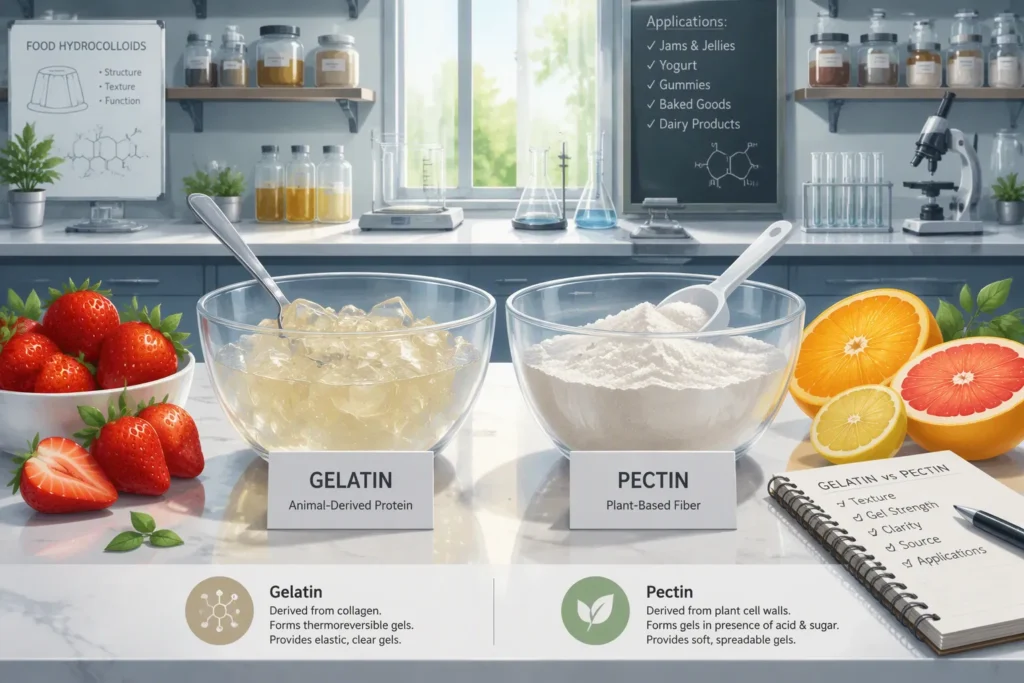
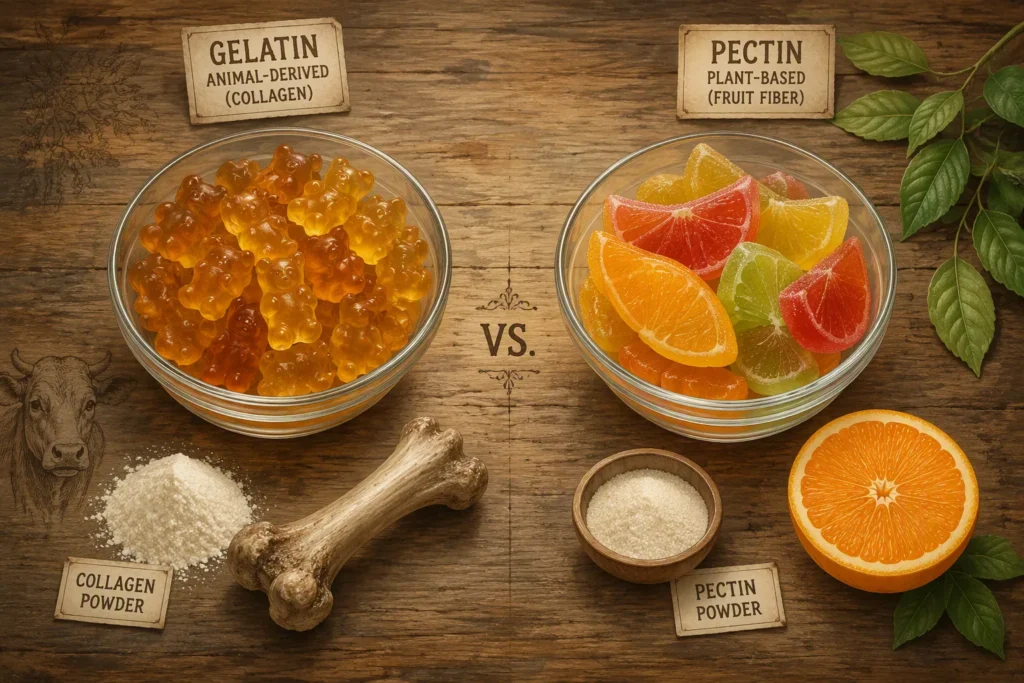
Gelatin originates from animal collagen. Manufacturers extract collagen from animal bones, skin, and connective tissues. They process this collagen into a pure protein through hydrolysis. When dissolved in warm water and then cooled, gelatin forms a gel. These gels appear clear and bouncy. They melt when reheated because gelatin is thermally reversible. This property makes it ideal for traditional gummy candies that melt in the mouth.
Gelatin provides a long, elastic bite. The texture stretches before it breaks. This quality creates a satisfying chew. Many consumers associate this mouthfeel with classic gummy bears. The high toughness of gelatin allows for dense, chewy products. It requires careful temperature control during manufacturing. It sets quickly and needs cooling tunnels for production. Manufacturers must control the temperature precisely to avoid melting.
Gelatin demonstrates a melting point around 95°F. This temperature affects shelf life. For storage, it holds up well at temperatures up to 80-85°F. In hot shipping conditions, gelatin gummies risk melting. This limitation matters for products traveling through warm climates. The choice of gelling agent directly impacts structural integrity. It works with higher pH levels. It also tolerates lower processing temperatures. This flexibility helps manufacturers.
However, the animal-derived origin creates dietary restrictions. It does not suit vegan or vegetarian consumers. It may face kosher and halal certification challenges. Many consumers now seek plant-based alternatives. This trend drives innovation in gelling agents. The question of gelatin vs pectin often starts with this dietary consideration. Manufacturers must weigh the benefits of a traditional ingredient against the growing demand for plant-based options.
What is Pectin?
This gelling agent comes from fruit. Citrus fruits provide the primary source. Oranges, lemons, and limes yield high-quality pectin from their peels. Apples also contribute it from their pomace. The substance is a plant-based polysaccharide. It creates heat-stable gels. These gels withstand high temperatures without melting. This heat stability makes it ideal for gummy supplements, particularly those manufactured with a dedicated pectin gummy depositing line.
The ingredient offers a short, quick bite. The gel breaks away cleanly. This texture suits high-potency formulas. Consumers who want precise dosing prefer this property. Gels made with it remain firm even above 85°F. They can withstand cooking temperatures up to 220°F. This heat stability makes it ideal for hot climates and long-distance shipping. The table below summarizes the temperature stability differences.
| Gelling Agent | Temperature Stability | Impact on Shelf Life |
|---|---|---|
| Gelatin | Melts around 95°F; holds up in storage up to 80-85°F | Suitable for moderate climates; risk of melting in hot shipping conditions |
| Pectin | Heat-stable up to 220°F during cooking; holds firm above 85°F | Better suited for hot climates and long-distance shipping; maintains structure at higher ambient temperatures |
Types of pectin differ in their gelling requirements. High-methoxy pectin needs high sugar content above 60%. It also requires acidic pH between 2.8 and 3.6. Low-methoxy pectin gels with calcium ions. It works at a wider pH range of 2.6 to 7.0. It requires less sugar, between 10 and 70%. This flexibility allows low-sugar formulations. Manufacturers can choose the type that best fits their product goals.
Consumer trends drive the preference for this ingredient. The rise of veganism and vegetarianism fuels innovation. Health-conscious consumers choose natural, plant-based ingredients. It supports clean-label products. It meets vegan, halal, and kosher requirements. This makes it a viable plant-based gelling agent for animal product-free foods. The demand for pectin continues to grow as more consumers adopt plant-based diets.
The choice of gelling agent is critical: pectin requires a specific buffering system based on the active ingredients and is often paired with botanicals, while gelatin can be used with higher pH and lower temperatures. This selection directly impacts structural integrity and stability.
It improves product texture, chewability, and moisture retention. It maintains stability during processing. It also supports functional benefits. It allows controlled ingredient release. It works with heat-sensitive active ingredients. This compatibility supports the trend toward functional supplements with added health benefits. Manufacturers can create products that meet specific health goals.
Gelatin vs Pectin: Key Differences in Gummy Production
Texture and Mouthfeel
The textural contrast between these two gelling agents defines the eating experience. Gelatin creates a long, elastic chew. The gel stretches before it breaks. This property produces the classic gummy bear mouthfeel. Pectin delivers a short bite instead. The gel breaks away cleanly without stretching. This clean break suits high-potency gummy formulation where precise dosing matters.
Texture analyzer measurements quantify this difference. The table below shows how gelatin content affects texture parameters.
| Gelatin Content | Springiness (elasticity) | Chewiness (N) | Hardness (N) |
|---|---|---|---|
| 3% | 0.63 | 46.50 | 91.72 |
| 6% | 0.72 | 74.32 | 128.75 |
| 9% | 0.75 | 91.98 | 157.12 |
| 12% | 0.83 | 131.38 | 198.80 |
Increasing gelatin from 3% to 12% raises springiness from 0.63 to 0.83. Chewiness climbs from 46.50 N to 131.38 N. Hardness increases from 91.72 N to 198.80 N. These numbers confirm that gelatin produces firmer, more elastic gels.
High-bloom gelatin creates a very firm, elastic texture, whereas formulating with pectin yields a tender, short texture. Gelatin gummies are more elastic and chewy, while pectin gummies have lower elasticity and break more easily.
For functional gummy products, this textural difference carries practical weight. A clean break helps consumers take precise portions. It also supports consistent active ingredient delivery. This makes pectin valuable for any high-potency gummy formulation targeting wellness markets.
Setting Temperature
Thermal behavior separates these gelling agents in production and distribution. Gelatin forms thermally reversible gels. The gel melts when heated. Its melting point ranges from 31.7–34.2 °C. Its gelling temperature falls between 22.4–25.2 °C. These temperatures depend on the animal source and molecular weight.
Pectin behaves differently. Once set, pectin demonstrates extremely high heat stability. It will not melt even at baking temperatures. However, pectin gels incredibly fast. This speed creates a risk of pre-gelation. Manufacturers must dissolve pectin above 80°C (176°F). A dedicated gummy cooker can help provide controlled heating during gummy preparation. Buffer salts often regulate the gelling speed, making precise temperature control during depositing essential.
| Gelling Agent | Setting Temperature | Remelt Temperature |
|---|---|---|
| Pectin | Above 90°C (194°F); depositor hopper at 93°C (200°F), nozzles at 90–93°C (194–200°F) | Not explicitly stated; re-melting possible but no temperature given |
| Gelatin | Not explicitly stated | Below 77°C (170°F) |
The production implications are clear. Gelatin requires cooling tunnels to set properly. Pectin needs a heated gummy depositor to prevent premature gelling. The formula must account for these thermal properties.
- Gelatin alone has poor heat resistance.
- Adding pectin increases the dissolution temperature of the gelatin gel.
- A pectin concentration of 0.5% is sufficient to ensure stability of jelly candy under most conditions.
Understanding the difference between pectin and gelatin helps formulators find a middle path. The gummy formulation can balance texture and heat stability.
Gelatin vs Pectin: Which Is Better for Gummies?
The answer depends on your target market and production goals. Each gelling agent serves distinct product categories. Understanding where each ingredient excels helps you make the right choice for your gummy formulation.
When to Choose Gelatin
Gelatin remains the gummy industry standard for traditional confectionery. Its cost-performance advantages make it the industry standard for traditional confectionery. Gelatin delivers superior clarity and elasticity. These properties make it ideal for classic gummy bears and fruit-flavored candies produced on a gelatin gummy depositing line.
Production efficiency also favors gelatin. SiMoGel technology reduces gummy setting time from 24 hours to just 15 minutes. This innovation cuts production cycles and energy costs significantly. Starchless depositing enables the use of hyper-hygienic silicon molds. Manufacturers eliminate starch trays, reduce material costs, and improve hygiene. For high-volume candy producers, these efficiencies translate into substantial savings.
Choose gelatin when your product targets traditional candy consumers. It works well for non-vegan lines where cost matters more than dietary certifications.
When to Choose Pectin
Pectin serves modern wellness brands seeking plant-based positioning. Consumer research from IFF confirms a market shift. Buyers increasingly seek products that fit vegan, kosher, and halal dietary restrictions. Pectin enables all three certifications naturally. Gelatin locks products out of these markets unless specially certified.
| Certification | Pectin Products | Gelatin Products |
|---|---|---|
| Vegan | Available (100% plant-based) | Not available (animal-derived) |
| Halal | Available (requires accredited certifier like JAKIM, MUI, or IFANCA) | Not available unless specially certified |
| Kosher | Available (usually pareve/neutral) | Not available unless specially certified |
Pectin also supports clean label gummies. The ingredient delivers high thermal stability up to 220°F (104°C). Gelatin melts at 31.7–34.2°C (89–93°F). This heat resistance prevents clumping during shipping and storage. Pectin provides superior flavor release with a clean melt-in-the-mouth texture. It masks metallic aftertastes from high-dose vitamins and minerals.
Market positioning conclusion: Choosing gelatin as the gelling agent locks a product out of vegan, halal, and kosher markets entirely. In contrast, pectin enables the production of a 100% vegan, halal-friendly, and kosher-compatible gummy with a clean ingredient declaration. For most modern wellness supplement brands targeting these dietary segments, pectin is unambiguously the better choice.
For functional gummies containing vitamins, minerals, or botanicals, pectin offers clear advantages. The ingredient supports premium product positioning. It aligns with consumer demand for natural, plant-based ingredients.
Gelatin vs Pectin for Vegan and Vegetarian Gummies
The dietary landscape shapes this decision more than any other factor. Consumers now read labels with care. They seek products that match their ethical choices. This shift pushes manufacturers toward plant-based alternatives. The gelatin vs pectin debate often begins with this question: which ingredient serves vegan consumers best?
Why Pectin Is Preferred for Plant-Based Gummies
Pectin delivers a clear advantage for vegan gummy options. It comes from citrus peels and apple pomace. No animal products enter the process. This plant-based origin makes pectin naturally vegan friendly. It also meets halal and kosher standards without special certification. Clean label gummies become possible with a simple ingredient declaration.
Formulation requires precision, however. High-methoxy pectin demands specific conditions to gel properly. It requires high sugar content (above 60%) and acidic pH (2.8–3.6) to form gels.
Market positioning conclusion: Choosing gelatin as the gelling agent locks a product out of vegan, halal, and kosher markets entirely. In contrast, pectin enables the production of a 100% vegan, halal-friendly, and kosher-compatible gummy with a clean ingredient declaration. For most modern wellness supplement brands targeting these dietary segments, pectin is unambiguously the better choice.
Several consumer groups drive this demand for vegan gummy options, including vegan and vegetarian consumers, halal-observant consumers, kosher-observant consumers, and clean-label shoppers.
Can Gelatin Gummies Be Vegan?
The short answer is no. Gelatin comes from animal collagen. This origin makes it unsuitable for vegans. No processing method changes this fact. Some manufacturers offer “vegan gelatin” products. These are mislabeled. They actually contain plant-based gelling agents like pectin or agar. True gelatin cannot be vegan.
Gelatin does offer production advantages. It tolerates higher pH levels. It requires less sugar to set. Gelatin requires precise temperature control during processing and storage to maintain structure.
For manufacturers targeting vegan consumers, pectin remains the clear choice. It serves as a direct substitute for gelatin in most gummy recipes. The functional properties differ, but the final product satisfies plant-based requirements. The difference between pectin and gelatin matters most at the label stage. Consumers check ingredients first. They want transparency. Pectin delivers that clarity.
Gelatin vs Pectin: How Do They Work in Gummy Formulations?
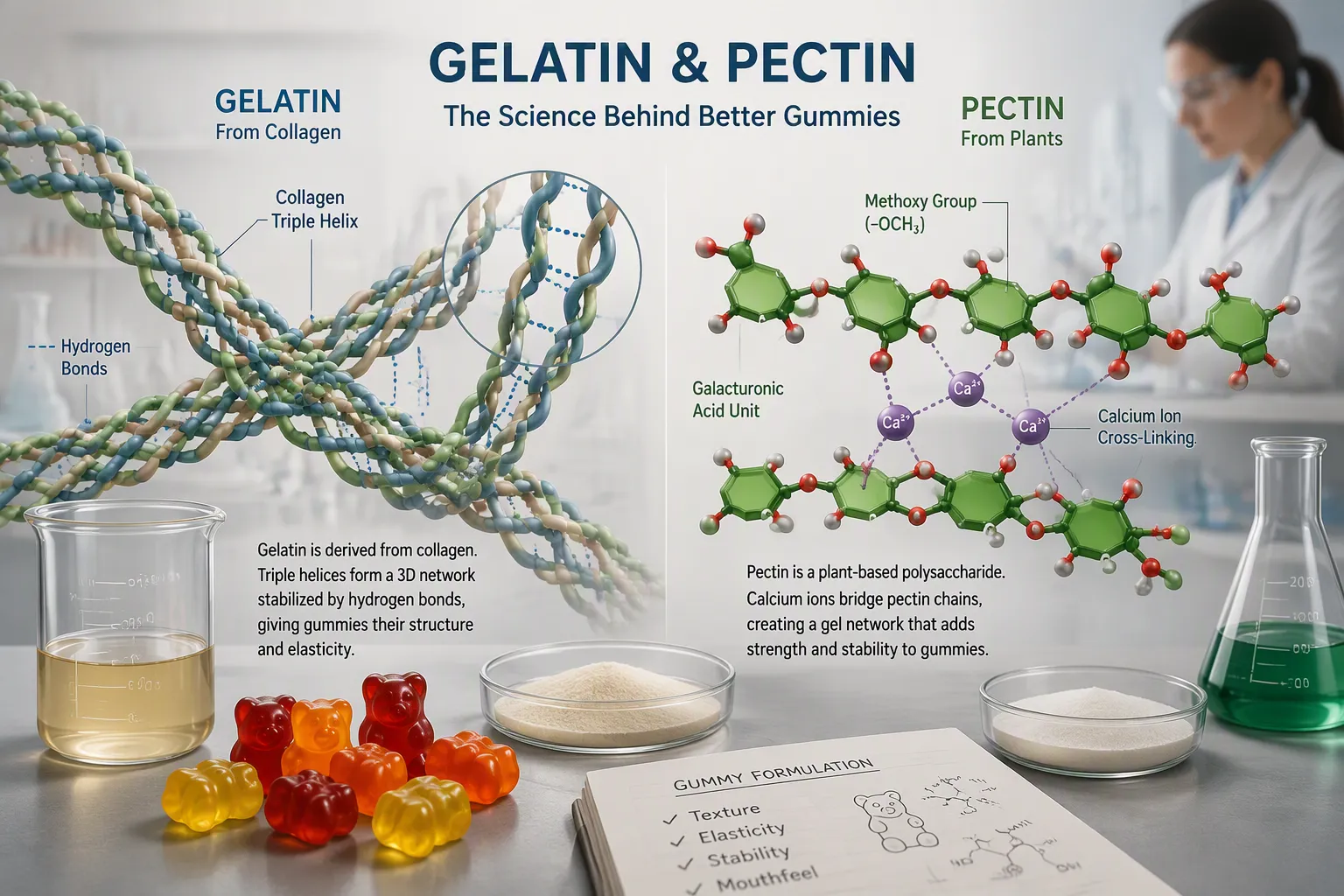
Understanding the molecular mechanics behind each gelling agent reveals why they behave so differently in production. The difference between pectin and gelatin starts at the molecular level and extends through every stage of manufacturing.
How Gelatin Forms a Gummy Texture
Gelatin derives from collagen through irreversible hydrolysis. This process reduces protein fibrils into smaller peptides. The resulting amino acid chains form a three-dimensional network through hydrogen bonding and hydrophobic interactions.
When the warm gelatin solution cools, the chains re-associate into collagen-like triple helices. These helices trap water within the network, forming a reversible hydrogel. This triple-helix renaturation drives gelation in gummy candies.
The melting point of gelatin increases with molecular weight and imino acid content. Higher melting temperatures allow the gel to be retained longer, improving mouthfeel. The gelling and melting temperatures depend on the animal species used as raw material, but drying methods do not affect the melting point.
This molecular behavior explains why gelatin requires cooling to set. The gel melts when reheated because the hydrogen bonds break. For a gummy formulation targeting traditional confectionery, this thermal reversibility creates the melt-in-your-mouth experience consumers expect.
How Pectin Forms a Gummy Texture
Pectin needs sugar and a specific acidity level, such as from citric acid, to trigger gel formation. These formulation requirements also make temperature-controlled pectin gummy depositing equipment important during production. Sugar acts as an active structural participant, not merely a sweetener. The pectin chains cross-link through hydrogen bonding and hydrophobic interactions, but only when sugar concentration and pH conditions align.
The gelling mechanisms differ fundamentally. Pectin needs sugar and a specific acidity level, such as from citric acid, to trigger gel formation. Gelatin gels purely through cooling of a heated liquid. This distinction matters for any healthy gummy candy formulation. Sugar reduction affects each agent differently.
For low-sugar formulations, low-methoxyl pectin can gel with calcium ions at lower sugar concentrations, while gelatin requires precise temperature control and alternative stabilizers to maintain chewiness.
For a high-potency gummy formulation containing CBD or vitamins, pectin offers distinct advantages:
- The clean break texture reduces the ‘waxy’ aftertaste sometimes associated with high-dose oil-based vitamins.
- The clean flavor profile requires less masking agent, allowing a higher payload of functional ingredients.
This makes pectin valuable for high-potency supplements where precise dosing and stability matter. The heat stability of pectin gels also protects active ingredients during shipping and storage.
For vegan and plant-based products, pectin remains the clear choice. Gelatin works only for non-vegan lines. The gelling agent selection ultimately shapes the entire gummy formula. Manufacturers must weigh texture goals, dietary positioning, and sugar requirements when choosing between these ingredients. The functional gummies market increasingly favors pectin for its clean label appeal, while gelatin retains its place in classic candy production. Understanding these mechanisms empowers formulators to make informed decisions for their specific product goals.
Gelatin vs Pectin: Formulation Considerations
Sugar and Sweetener Compatibility
Sugar plays a different structural role in each gelling system. High-methoxyl pectin demands a high soluble solids content—typically 60% or more—to form a gel. Gelatin, by contrast, sets through cooling alone and tolerates low-sugar environments. This distinction shapes every sugar-free or reduced-sugar gummy formulation.
For sugar-free products, various polyols and high-intensity sweeteners can be used, but their compatibility depends on the gelling agent.
pH Requirements
The pH window separates these gelling agents more sharply than any other variable. High-methoxyl pectin requires a pH between 2.8 and 3.6 to gel properly. This narrow range demands precise acidification during production. Gelatin tolerates a much wider pH spectrum, making it more forgiving in complex formulations.
The production implications extend beyond chemistry. Pectin requires close attention to pH, acidification, and temperature simultaneously. Gelatin focuses primarily on temperature control. This difference affects equipment choices. Pectin requires heated depositor equipment to prevent premature gelling. Gelatin requires cooling tunnels to set properly.
Setting time compounds these differences. Gelatin requires 24 hours to set, limiting mold turnover. Pectin sets quickly, enabling faster demolding and higher throughput. For a high-potency gummy formulation, this speed matters. For a high-potency gummy formulation targeting wellness markets, pectin’s quick set supports efficient production. Another high-potency gummy formulation advantage: pectin’s heat stability protects active ingredients during shipping.
The difference between pectin and gelatin ultimately guides equipment investment and production scheduling. Understanding these formulation considerations helps manufacturers choose the right gelling agents for their specific goals.
Conclusion: Gelatin or Pectin for Your Formulation?
Neither gelling agent is universally superior. The right choice depends on your product goals. Your decision shapes your gummy product’s texture, shelf life, and market positioning. Gelatin offers a classic chewy texture and cost advantages. Pectin provides plant-based appeal and heat stability. Your decision must align with target market, desired texture, processing conditions, and dietary requirements.
The table below summarizes when each ingredient performs best.
| Decision Criterion | Choose Pectin | Choose Gelatin |
|---|---|---|
| Target market | Vegan, plant-based, halal, kosher, clean-label | Traditional confectionery, non-vegan lines |
| Texture preference | Firmer bite, clean break, faster flavor release | Elastic bite, gradual flavor release, classic chew |
| Distribution conditions | Warm climates, long-distance shipping, heat exposure | Controlled environments, short supply chains |
| Dietary positioning | Vegan-friendly, universal certification | Certified gelatin sourcing available |
| Ingredient compatibility | High-potency actives, heat-sensitive nutrients | Standard gummy formulations |
The distinction between gelatin vs pectin extends beyond dietary labels. The fruit-based gelling agent requires careful pH control between 2.8 and 3.6 and high sugar content for high-methoxyl types. The animal-derived alternative tolerates wider pH ranges and lower sugar levels. These differences affect equipment choices and production schedules. The fruit-based gelling agent sets quickly, enabling faster demolding. The animal-derived option requires 24 hours to set fully. Is the plant-based option vegan? Yes, it comes from fruit sources. This makes it the clear choice for plant-based products.
Consider your market position. For functional gummies targeting wellness consumers, the fruit-derived gelling agent supports clean-label positioning. For traditional confectionery, the animal-derived option delivers the classic texture consumers expect. Many manufacturers now ask: can I use the fruit-based alternative instead of gelatin? The answer depends on whether your formulation can accommodate its specific pH and sugar requirements. You can substitute this gelling agent for the animal-derived option in many recipes, but adjustments are necessary. The gelling agents work through different mechanisms.
Ask yourself these questions. Is your target consumer vegan or vegetarian? What texture profile do you want? What are your processing capabilities regarding pH and temperature control? Does your product need to withstand high temperatures during shipping? Your answers guide the decision. Both ingredients produce high-quality results when used correctly. Choose the one that aligns with your product’s unique requirements.
Neither ingredient wins universally. Your gummy formulation determines the right choice. Gelatin delivers an elastic chew and lower cost, yet it melts in heat and excludes vegan buyers. Pectin offers plant-based appeal and heat stability, though it demands precise pH and sugar control. Ask yourself: Is my audience vegan? Do I want a clean break or a stretchy bite? Can my equipment manage temperature and acidity? Will shipments face warm conditions? For functional gummies targeting wellness consumers, pectin often fits best. For traditional candy, gelatin remains reliable. Both ingredients produce quality results when handled correctly. Match the gelling agent to your product goals, and your functional gummy will succeed.
FAQ
Can I substitute pectin for gelatin in any recipe?
Not directly. Pectin requires specific conditions to gel: high sugar content and acidic pH between 2.8 and 3.6. Gelatin sets through cooling alone. You must adjust the entire formulation when swapping one for the other. Test small batches first to verify texture.
Is pectin the same as gelatin?
No. Pectin comes from fruit peels and is plant-based. Gelatin comes from animal collagen. They create different textures and respond differently to heat. Pectin stays firm when warm; gelatin melts around 95°F. Your choice affects shelf life and dietary compatibility.
Are pectin and gelatin interchangeable in gummy production?
They require different processes. Pectin sets quickly but needs heated depositor equipment. Gelatin takes 24 hours and needs cooling tunnels. Production lines rarely handle both without modification. Consider equipment costs when choosing your gelling agent.
Is fruit pectin vegan?
Yes. Pectin derives entirely from citrus peels and apple pomace. It contains no animal products. This makes it a primary ingredient for vegan gummy options. Gelatin, by contrast, comes from animal bones and skin. For plant-based functional gummies, pectin serves as the clear choice.
What is the difference between pectin and gelatin for texture?
Gelatin produces a long, elastic chew that stretches before breaking. Pectin creates a short, clean bite that snaps apart quickly. High-potency formulas often prefer pectin’s clean break for precise dosing. Traditional candy makers favor gelatin’s classic stretchy mouthfeel.