
Choosing a gummy mold requires evaluating material flexibility, cavity dosing volume, formula viscosity, operational scale, and budget. Active ingredient precision depends directly on exact cavity dimensions across all production levels. Food-grade silicone provides easy demolding for entry-level setups. Industrial operations require stainless steel or rigid polycarbonate molds to maintain tight tolerances during continuous depositing. Production volume changes by facility scale:
| Equipment class | Daily production capacity |
|---|---|
| Entry-level machines | 50–200 kg/day |
| Automatic gummy machines | 200–800 kg/day |
| Commercial gummy makers | 500–1,000 kg/day |
| Turnkey gummy production lines | 1,000–5,000 kg/day |
This ultimate guide helps commercial operators select optimal tooling for accurate active ingredient dosing and smooth daily sanitation.
Key Takeaways
- Select silicone molds for easy manual release or choose polycarbonate and metal molds for high-speed automated lines.
- Calculate exact cavity volume based on formula density to ensure consistent active ingredient dosage in every gummy.
- Match physical tray dimensions and cavity counts directly to your depositor machinery and daily production goals.
- Follow strict cleaning routines and choose FDA-compliant, food-grade materials to prevent batch contamination and ensure product safety.
1. What Is a Gummy Mold?

A gummy mold is a specialized cavity tray designed to shape liquid gelatin or pectin mixtures into solid confectionery units during cooling. Production managers consider food-grade silicone and polycarbonate to be among the best materials for gummy molds due to their distinct mechanical properties. High-quality tooling maintains precise cavity volume across repeated thermal cycles. Precise cavity volume guarantees accurate dosage control for active ingredients in functional candies. Confectionery producers rely on gummy molds to establish uniform piece weight across entire manufacturing runs.
Choosing the right material impacts daily cleaning routine, tool durability, and demolding speed. Processing facilities often select silicone molds for their exceptional flexibility and non-stick performance. Staff members demold soft pieces easily by peeling the flexible tray back without damaging delicate edges. Rigid equipment setups rely on polycarbonate molds that use mechanical push pins or knockout frames instead. Gummy depositing machines require rigid tray dimensions to maintain exact alignment beneath depositing nozzles. Unaligned trays cause misfeeds during depositing.
| Factor | Silicone Mold | Polycarbonate Mold |
|---|---|---|
| Ease of Demolding | Non-stick, easy release | May need greasing |
| Durability | Long-lasting, dishwasher safe | Prone to scratches, hand wash |
| Cost | $15-$30 per mold | $5-$15 per mold |
| Flexibility | Highly flexible | Rigid |
| Demolding Method | Peel/release | Push/knock-out |
| Complex Shape Support | Excellent | Limited (needs draft angles) |
| Product Surface Finish | Matte/satin | Glossy/polished |
| Temperature Range | -40°C to +230°C | -40°C to +135°C |
| Thermal Shock Resistance | Excellent | Moderate (can crack) |
| Chemical Resistance | Excellent (most oils/acids) | Good (attacked by solvents) |
| Scratch Resistance | Self-healing (elastic) | Scratches visible permanently |
| Weight (per mold) | Light | Heavier |
| Customization Lead Time | 7–15 days | 15–30 days |
| Initial Tooling Cost | Lower | Higher |
| Food-Safe Options | FDA/LFGB platinum-cure | Food-grade PC available |
| Typical Service Life | 500–3000+ cycles | 5000–20000+ cycles |
Selecting between silicone molds and rigid polycarbonate tooling depends on target surface quality and production speed. Premium silicone molds provide outstanding thermal stability from -40°C to +230°C. They resist thermal shock during rapid cooling cycles inside cooling tunnels. High-purity platinum silicone ensures full safety for food contact without transferring unwanted odors or tastes to candies. The flexible elastomer formulation also prevents structural cracking when exposing cold trays to warm wash water during sanitation routines.
Hard polycarbonate molds operate within a temperature range of -40°C to +135°C. These rigid trays excel in high-speed automated lines using automated ejection systems. Polycarbonate molds deliver specific visual benefits for finished pieces:
- Smooth and glossy gummy surfaces
- Clean edges and fine details
- Easy demolding without additional release agents
- Consistent product appearance
The rigid structure prevents tray flexing under heavy automated depositing heads. Consistent mold geometry protects high-speed lines against jams during demolding cycles.
Most food-grade silicone molds are dishwasher-safe on the top rack. Check your specific product’s care guidelines. Polycarbonate molds should generally be hand-washed to avoid scratching and clouding from harsh detergents.
Each tray type serves distinct production scales. Small-batch commercial kitchens use silicone gummy molds to handle small production runs efficiently. The elastic structure of silicone gummy molds allows operators to demold intricate geometries cleanly. In addition, silicone gummy molds minimize product tearing during manual harvesting. Conversely, industrial facilities choose rigid polycarbonate molds to maintain strict dimensional accuracy across thousands of continuous manufacturing cycles. Rigid trays withstand wear from automated conveyers. Understanding these key operational differences helps plant engineers select the optimal gummy mold for their facility.
2. Gummy Mold Materials: Silicone vs. Metal Molds
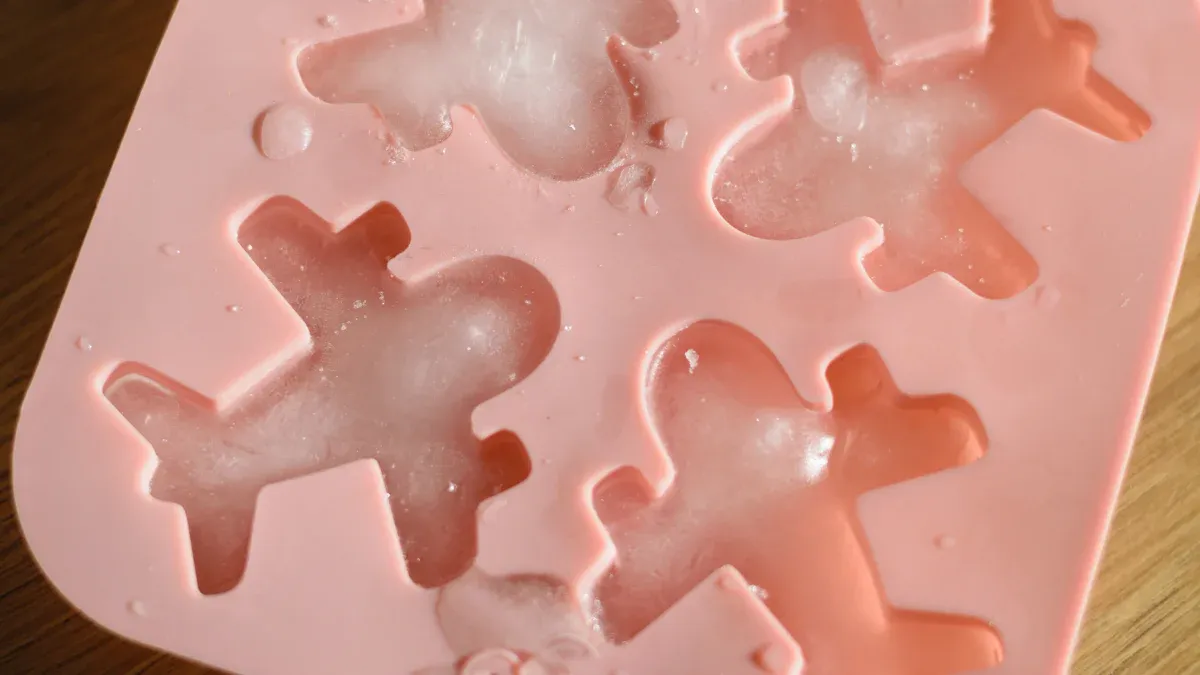
Selecting the right mold material directly impacts production speed, active dosing precision, and equipment compatibility. Confectioners evaluate silicone molds for flexible release in small operations. Meanwhile, industrial facilities use metal tooling or polycarbonate molds for high-speed automated lines. Evaluating key trade-offs between elastomeric polymers and rigid metal tooling allows plant engineers to select optimal components.
2.1 Silicone Gummy Molds: Flexible Release and Easy Cleaning
Small kitchens and commercial candy makers frequently choose silicone gummy molds for daily production. Flexible silicone gummy molds allow staff members to demold sticky products without tearing delicate edges. Many artisan candy shops rely on silicone gummy molds due to their tear resistance. Workers flex the elastomeric tray to harvest cured candies efficiently. Cleaning dirty silicone gummy molds requires minimal labor because sugar residue releases quickly. In addition, standard silicone molds offer fast turnaround between production batches. Proper maintenance prolongs mold longevity while preventing product contamination.
Precision active dosing requires exact liquid volume conversions during formulation. Formulators measure liquid slurry volume in milliliters, but dosing regulations require piece weight in grams. Slurry density determines the exact ratio between liquid volume and mass. Operators calculate target cavity volume by dividing desired piece mass in grams by liquid density in grams per milliliter. Establishing an accurate cavity volume prevents under-dosing or overflow during depositor fills.
Consistent cavity volume across every tray ensures uniform active ingredient delivery. High-grade commercial silicone gummy molds maintain tight tolerances under repeated thermal stress. Premium silicone molds preserve accurate cavity volume across long production runs. Accurate liquid measurements ensure compliance with strict dietary supplement regulations. Operators who source the best silicone gummy molds achieve precise batch uniformity and fast demolding cycles.
2.2 Metal Gummy Molds: Built for High-Volume Production
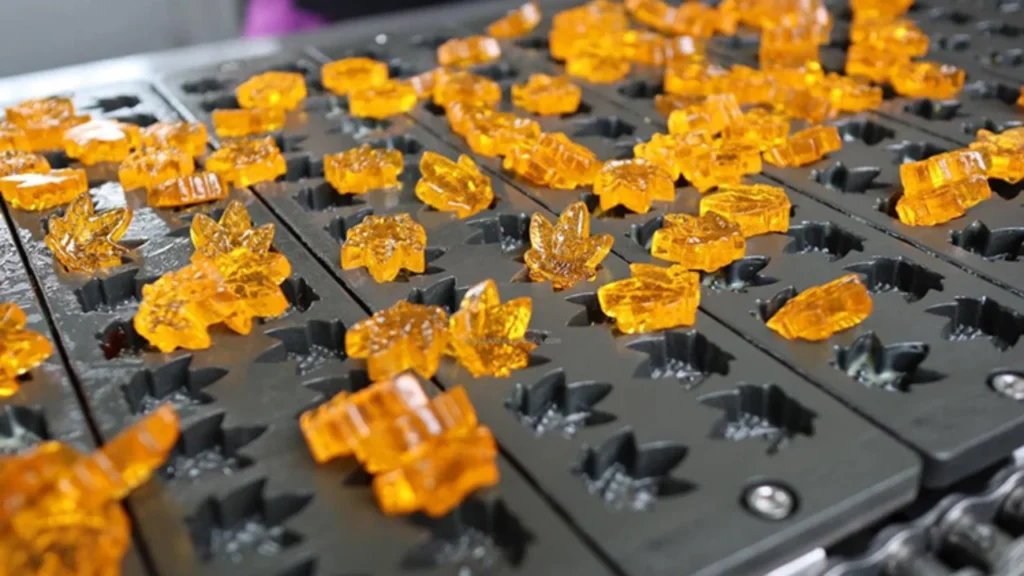
High-volume continuous manufacturing lines require rigid aluminum, stainless steel, or durable polycarbonate molds. Metal molds transfer heat rapidly inside cooling tunnels to speed up setting times. Metal molds also resist structural warping under high thermal shock inside flash freezing tunnels. Rigid polycarbonate molds maintain strict cavity dimensions beneath heavy mechanical depositing heads. Automated knock-out pins harvest finished gummies from metal trays without manual handling.
Industrial plant managers calculate required mold cavity count by matching target piece weight to overall production yield goals. Operators execute a straightforward process to determine equipment needs:
- Multiply daily production yield targets in kilograms by one thousand to calculate total yield mass in grams.
- Divide total batch mass in grams by individual target piece weight to calculate total required pieces per shift.
- Divide total required pieces by depositor cycle speed per hour to establish required cavity count per mold set.
Every cavity volume must remain stable to guarantee dosage safety in active supplement gummies. Each cavity volume dictates precise piece weight across continuous manufacturing shifts. Maintaining steady cavity sizing prevents costly product rejections and raw material waste. Unlike lightweight silicone molds, industrial metal tooling withstands aggressive automated wash stations and high-pressure water jets. Flexible silicone gummy molds fit short-batch operations, whereas heavy metal molds maximize high-speed factory output. Selecting proper silicone gummy molds or metal trays ensures efficient candy manufacturing. Furthermore, versatile silicone molds help expanding confectioners scale up daily production capacity smoothly.
3. Cavity Count and Production Scale: Matching Your Gummy Mold to Output
Selecting the right tooling layout bridges the gap between kitchen batches and automated factory lines. Confectioners optimize gummy production by matching cavity count, mold dimensions, and active ingredient dosing to their daily output goals.
3.1 Gummy Molds for Small-Batch Production
Small confectioners and artisan kitchens often start with commercial silicone gummy molds to launch new product lines. These flexible trays allow operators to fill a mold for gummy candies manually or with tabletop depositors. High mixture viscosity can slow down manual pouring into fine mold details. Operators calculate the exact cavity volume needed for target piece weight by dividing target piece mass by formula density. For instance, a 3.6 g piece target divided by a 1.20 g/mL density requires a cavity volume of 3 mL. Precision sizing guarantees consistent cavity volume across every tray.
Small-scale gummy production relies on simple manual routines during depositing and demolding cycles. Kitchens select standardized mold dimensions that fit on ordinary bakery racks and drying trays. Total batch volume equals cavity volume multiplied by cavity count, mold count, and cycle count. Proper sanitation prevents moldy gummy bears by keeping equipment completely dry before storage. Using flexible silicone molds gummies helps workers release finished candies quickly without damaging delicate edges.
3.2 Gummy Molds for Commercial Production
Scaling up to commercial production requires switching to high-density cavity layouts and automated depositing lines. Machine operators must match physical mold dimensions directly to depositor nozzle spacing, cooling tunnel conveyors, and automated packaging equipment. Industrial gummy production utilizes rigid polycarbonate boards or metal tooling to achieve maximum output speed. High mixture viscosity requires elevated hopper temperatures to maintain rapid fluid flow rates. Consistent flow rates prevent air pockets and unfilled cavity volume sections during depositing cycles.
Large facilities determine equipment sizing based on daily output targets. Continuous commercial production lines move hundreds of standardized mold trays through cooling tunnels every hour. Plant engineers calculate total yield by analyzing cavity volume, cycle speeds, and total mold units. High-speed gummy production minimizes scrap rates, streamlines automated gummy production lines, and boosts daily commercial production efficiency.
4. Gummy Mold Design and Customization
4.1 Common Gummy Mold Shapes
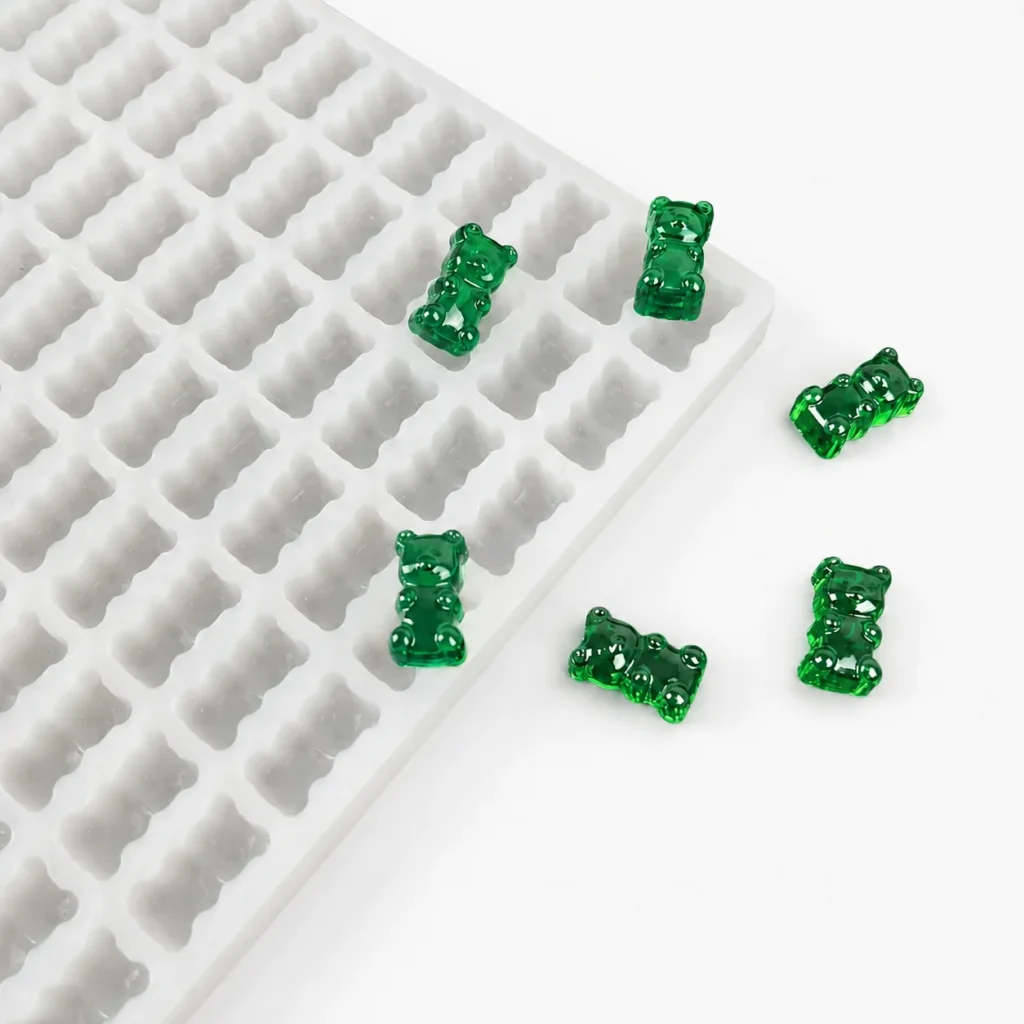
Confectioners choose standard gummy shapes to meet consumer preferences and streamline automated depositing. Classic bear designs, worms, and geometric cubes represent traditional market standards. Production teams select a specific gummy bear candy mold when producing retail lines. Every cavity profile must maintain proper draft angles. Tapered cavity walls allow smooth air release during liquid depositing. Proper draft angles prevent piece tearing during mechanical demolding. Liquid gel flows easily into simple gummy shapes without forming trapped air pockets.
Market demand influences how manufacturers evaluate new gummy shapes for commercial production. Modern consumer preferences drive popular gummy trends toward functional health supplements. Distinctive gummy shapes help commercial brands stand out on retail shelves. Square and spherical geometries accommodate higher active ingredient volumes while maintaining clean release properties. Intricate designs with sharp internal corners can trap air bubbles during rapid fills. Achieving your desired gummy shape requires aligning cavity depth with formula setting speed.
4.2 Custom Logo and Branded Gummy Molds
Commercial brands invest in custom gummy molds to build strong product identity and deter counterfeiting. Engraving brand logos or dosage numbers directly into cavities transforms ordinary confections into proprietary products. Product developers specify exact custom design requirements before starting mold fabrication. Engineers convert these specifications into precise CAD models to verify cavity volume. Manufacturers utilize custom gummy molds to differentiate active supplement lines from generic confections. Specialized custom gummy molds ensure consistent brand presentation across high-volume runs.
Creating specialized tooling requires balancing visual appeal with physical demolding capability. Complex logo engravings inside custom gummy molds must maintain polished surface finishes to prevent gelatin adhesion. Tooling engineers eliminate microscopic ridges that cause product sticking. Incorporating distinct logos into a high-capacity gummy bear candy mold requires exact machining tolerances. Advanced producers rely on custom gummy molds to deliver unique visual identities. Precise geometric planning ensures smooth demolding for complex gummy shapes across continuous production shifts. Imprinting custom logos onto proprietary gummy shapes establishes clear market differentiation. The candy business thrives on innovation and creativity, pushing the boundaries of flavor and design. Manufacturers continually experiment with new ingredients and techniques to captivate consumers. As a result, the competition in the candy sector drives brands to diversify their offerings, enhancing both visual appeal and taste.
5. Key Performance Factors When Choosing a Gummy Mold
5.1 Demolding Performance
Demolding performance directly impacts overall daily production efficiency and finished gummy quality. Machine operators rely on elastomeric tools to harvest soft confections without tearing delicate surface features. Flexible silicone molds allow plant staff to peel back cavity walls cleanly during manual or semi-automated operations. High-grade polished cavity finishes reduce the need for extra food-grade release oils during daily runs. Consistent mechanical release keeps commercial production lines moving without unplanned structural interruptions.
Rigid equipment setups require dedicated mechanical knockout pins or directional air ejection systems to harvest cured pieces. Standardized draft angles along interior cavity walls minimize surface friction during automated mechanical pushing cycles. Choosing a reliable gummy mold ensures accurate geometric retention across thousands of continuous manufacturing shifts. Proper cavity surface polishing eliminates microscopic wall flaws that cause active ingredient gel sticking. Efficient demolding performance keeps daily product rejection rates low across every shift.
5.2 Heat Resistance and Thermal Performance
Thermal stability determines how well manufacturing tooling handles hot liquid slurry depositing and fast cooling tunnel setting cycles. Depositing hot gel mixtures requires durable tray materials that resist continuous operational thermal stress. Food-grade silicone handles operating temperatures up to 260°C (500°F), while Teflon-coated aluminum withstands process temperatures up to 300°C (572°F). Polycarbonate maintains structural integrity with a heat deflection temperature of 140°C at 0.45 MPa. Commercial operations select versatile silicone molds to endure rapid temperature swings inside fast-paced production lines.
Proper thermal management inside rapid cooling tunnels prevents structural tray warping and internal mechanical stress. Low thermal conductivity in rigid plastic trays, such as 0.19 to 0.22 W/(m·K) at 23°C for polycarbonate, supports gradual and uniform batch cooling. Plant engineers maintain continuous use temperatures below 115°C for polycarbonate trays to prevent accelerated material aging. Platinum silicone molds maintain stable dimensions across temperatures from -40°C to 230°C, with specialized grades reaching up to 260°C. Robust thermal performance guarantees long equipment service life during automated candy production. High-performance silicone molds deliver predictable gelatin setting times across every manufacturing run.
6. Food Safety and Compliance Requirements
6.1 Sanitation and Mold Maintenance
Rigorous sanitation routines in daily gummy production protect consumers from chemical hazards and microbial contamination. Food-grade silicone molds resist degraded exposure to organic acids, sugars, fats, oils, dairy products, and alcohols during continuous processing cycles. Process operators select food-grade silicone equipment because it endures dishwashers, microwave heating, and high-temperature steam-autoclave sterilization routines without degradation. Implementing structured sanitation prevents active supplement batch cross-contamination and prolongs overall mold longevity in high-volume gummy production.
High-volume manufacturing plants establish standardized cleaning procedures to maintain total hygiene:
- Flush mold equipment thoroughly with warm water after each processing run, using mild neutral detergents to remove sticky sugar residues.
- Disassemble removable components weekly for deep cleaning with neutral detergents, drying every surface fully, and applying sanitizers before reassembly.
- Inspect cavity surfaces continuously for physical wear or micro-cracks, replacing degraded components immediately to avoid bacterial harborages.
Maintaining clean equipment ensures consistent release properties and reduces product scrap during automated handling in gummy production.
6.2 Choosing a Reliable Gummy Mold Manufacturer
Leading gummy manufacturers evaluate international tooling suppliers through strict quality audits, regulatory certifications, and precision material safety standards. Molds intended for gummy production must comply with rigid food contact material framework rules established under FDA 21 CFR Parts 170-199 and EU Framework Regulation (EC) 1935/2004. Regulatory compliance relies on specialized laboratory migration testing, which verifies that raw chemical constituents do not leach into active supplement formulas during contact.
👉Grand Machinery provides gummy processing equipment and integrated production solutions for manufacturers scaling from individual machines to complete production lines.
Commercial gummy manufacturers collaborate exclusively with equipment builders operating under EU GMP Regulation (EC) 2023/2006 standards. Automated gummy production relies heavily on high-purity food-grade silicone or polished stainless steel components to uphold strict hygienic limits. Responsible gummy manufacturers examine independent laboratory testing documentation before deploying new cavity trays onto high-speed manufacturing lines. Selecting a certified manufacturer mitigates compliance risks, preserves active dosing safety, and supports reliable continuous output during full-scale gummy production.
7. Gummy Mold Compatibility with Automated Production Lines
7.1 Gummy Depositor and Mold Compatibility
Automated gummy production demands precise physical matching between depositor nozzles and tray cavities. High-speed gummy production requires exact pitch spacing to prevent misdirected liquid streams onto conveyor belts. Trays move beneath mechanical fill heads at rapid line speeds. Structural rigidity keeps individual cavity centers aligned under high-pressure liquid dosing nozzles. Consistent cavity positioning eliminates messy drips, preserves clean equipment surfaces, and protects accurate active ingredient dosage control for functional candies during continuous plant shifts.
Factory managers select hard polycarbonate boards or heavy metal molds for continuous automated lines. Each rigid gummy mold maintains strict outer dimensions to fit standard chain drives without structural flexing. Industrial metal tooling withstands constant mechanical pushing from automated indexing drive units during long manufacturing cycles. Solid tray construction prevents operational jamming inside automated demolding machinery. Proper physical alignment reduces syrup waste and lowers manual cleaning labor during high-volume gummy production.
7.2 Cooling and Setting
Hot liquid gel mixtures enter refrigeration cooling tunnels immediately after automated fill cycles finish. Continuous gummy production relies on regulated airflow and precise ambient temperature management to form solid candies cleanly. Standard gummy production formulas need steady thermal extraction to achieve proper gelling performance. Mold trays must transfer thermal energy evenly across every cavity to prevent soft internal cores. Unbalanced heat dissipation creates sticky surface residues, inconsistent product textures, and deformed shapes on packaging lines.
High-capacity manufacturing facilities move thousands of specialized trays through multi-pass cooling circuits every hour. Automated gummy production requires optimized tray height clearance for maximum cold air circulation across continuous conveyor systems. Rapid heat transfer shortens overall setting duration inside the refrigerated tunnel. Fully cured candies release cleanly during automated mechanical demolding cycles without tearing delicate edges. Streamlined thermal transfer accelerates overall daily yield and improves finished batch uniformity for active supplement gummy production.
8. Gummy Mold Price: What Affects the Cost?
Calculated tooling investments depend heavily on material selection, cavity density, structural complexity, and overall order volume. Confectionery operators evaluate initial mold cost against long-term production needs to select the most cost-effective tooling solution.
- Mold material: Platinum-cure silicone with a hardness of Shore 30A to Shore 40A serves as a low minimum order quantity option. Silicone provides fast prototyping for seasonal runs, artisan batches, and pilot production lines. Tooling engineers only recommend rigid steel molds when daily output volume and tight tolerances justify the higher initial tooling expense.
- Cavity count: Adding cavities increases tray complexity and upfront tooling cost. However, high-density layouts reduce labor costs per unit during operational runs. Higher cavity counts also require extra design for manufacturability review time before prototype approval.
- Custom engraving: Logo depth typically ranges between 0.3 mm and 0.6 mm. Soft confections require shallower engraving depths to avoid defects. Intricate logo designs or excessively deep engravings create fill and demold defects. Complex details add review time, extend prototype lead times, and increase potential rework costs.
- Cost and lead time: Prototype silicone tooling takes between 3 and 7 business days after CAD approval. Full production tooling requires 2 to 4 weeks, while manufacturers return initial quotes within 24 hours. Small-batch custom silicone tooling starts at a minimum order quantity of 20 pieces, which keeps upfront entry costs low.
Purchasing managers balance initial capital outlay with daily output goals. Small-scale launches use low-MOQ silicone trays to test market response without committing to expensive tooling. Industrial facilities invest in high-capacity metal or polycarbonate boards to lower per-unit manufacturing costs over long production runs. Selecting the right combination of material, cavity count, and surface detail keeps your initial gummy mold expenditure within budget.
9. Why Choose Grand Machinery for Gummy Mold Solutions?
9.1 Custom Gummy Mold Design
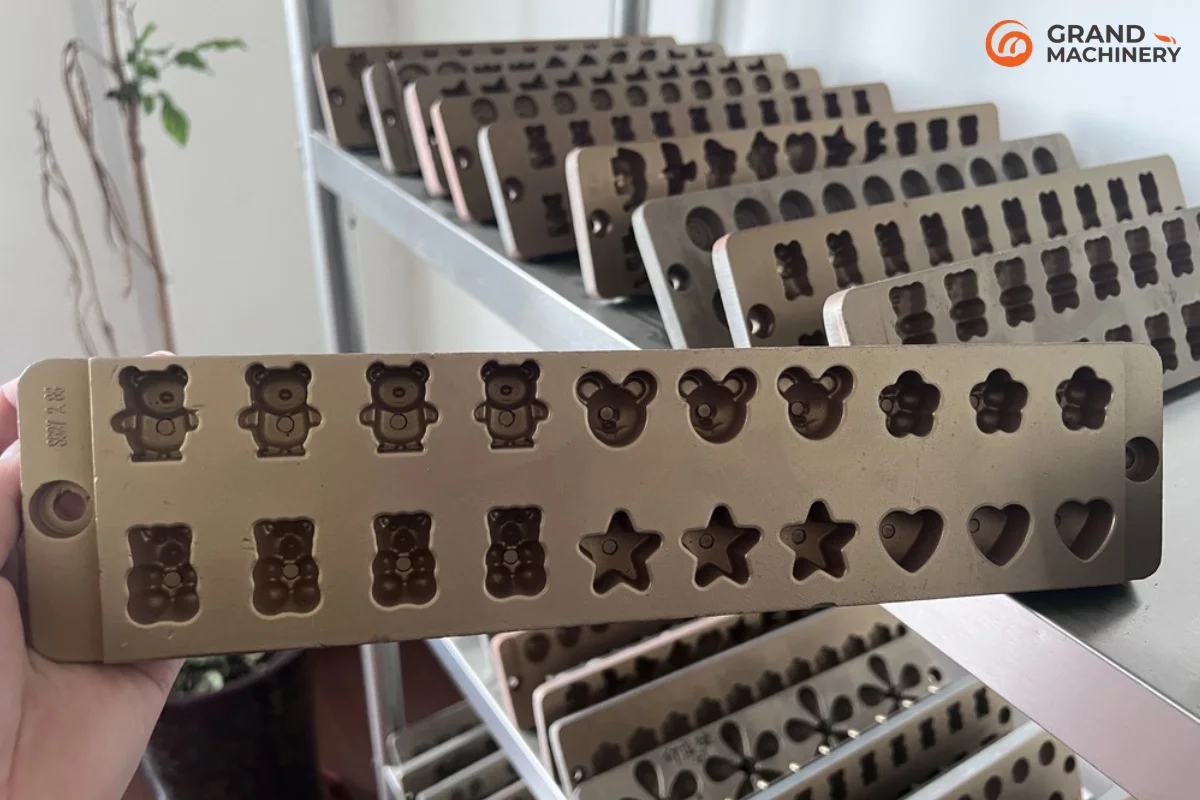
Grand Machinery delivers customized engineering solutions tailored directly to demanding gummy production requirements. Confectionery brands rely on custom gummy molds to build distinct product identities and strong visual recognition. Experienced tooling engineers convert original design concepts into high-precision cavity layouts that streamline modern gummy production runs. Exact cavity drafting preserves target active ingredient dosing across long continuous processing cycles. Precision engraving allows commercial clients to imprint detailed logos directly onto finished candy surfaces without impacting release performance.
Selecting custom gummy molds helps commercial operators prevent costly batch dosage inconsistencies. High-grade food materials resist thermal distortion during continuous high-temperature depositor operations. Mechanical design engineers carefully calibrate interior cavity draft angles to guarantee smooth piece release without surface tearing. Using custom gummy molds allows plant technicians to harvest delicate candies quickly during manual or automated demolding. Proper tooling geometry reduces overall scrap rates and material waste during full gummy production.
9.2 Compatibility with Gummy Production Equipment
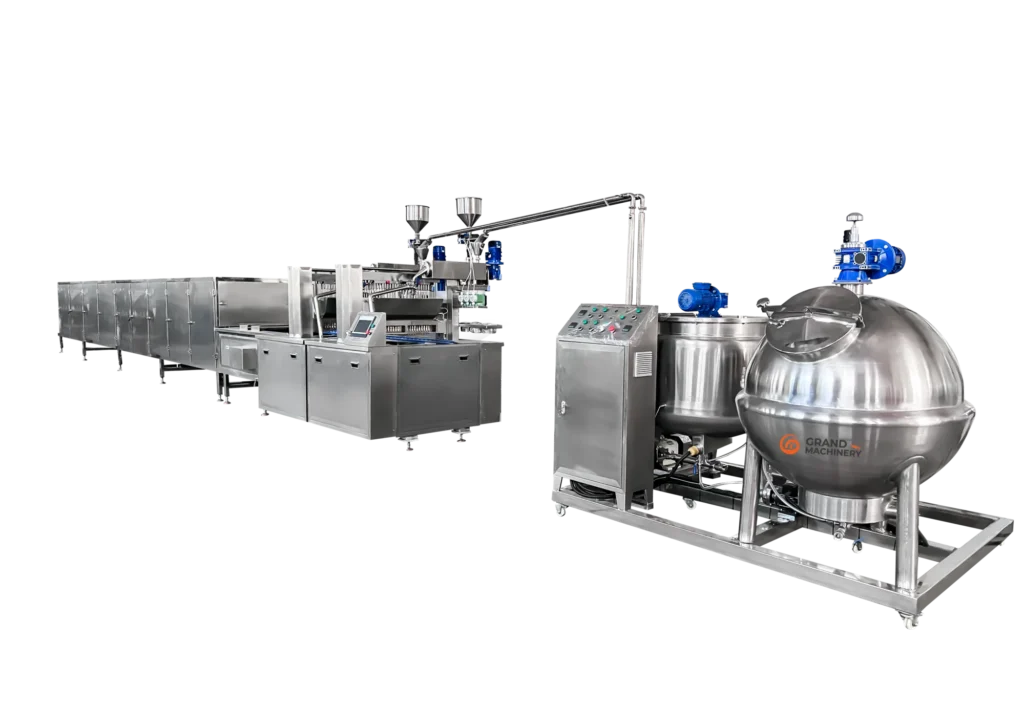
Integrating new tooling into existing processing lines requires exact physical alignment across every station. Grand Machinery manufactures rigid mold trays designed specifically for seamless mounting onto automated depositor equipment. Standardized tray dimensions ensure tight mechanical alignment beneath moving nozzles during high-speed gummy production. Plant managers improve overall efficiency in daily gummy production by using custom gummy molds designed for their specific machinery. Proper mechanical fit prevents sticky syrup leaks and maintains steady output speeds across continuous operational shifts.
Tooling engineers test each tray system to support continuous gummy production cycles under heavy industrial workloads. Gummy manufacturers count on stable tray designs to maintain steady conveying speeds through automated refrigeration cooling tunnels. Hardened board structures withstand aggressive mechanical ejection pins during high-volume demolding operations. Professional gummy manufacturers select custom gummy molds to protect finished product quality and maximize overall hourly output. Reliable equipment integration optimizes energy efficiency and simplifies sanitation routines across automated gummy production setups.
10. Conclusion: Gummy Mold Buying Checklist
Selecting the ideal gummy mold requires evaluating operational scale, material safety, and equipment specifications. DIY hobbyists, artisan bakers, and commercial manufacturers require different tooling setups. Facility leaders must audit formula fluid behavior, piece-weight targets, and daily output goals before placing a final order. Matching your facility persona with appropriate cavity layouts reduces startup costs and eliminates processing bottlenecks.
| Criterion | Evaluation Checklist Evidence |
|---|---|
| Material safety | Confirm food-grade, FDA-compliant silicone for easy demolding, or stainless steel for corrosion resistance and heat distribution. Verify BPA-free test reports with suppliers. |
| Dosage precision | Verify cavity volume through test batches before establishing label claims. Precision cavity alignment supports consistent filling, uniform piece weight, and reduced raw material waste. |
| Viscosity compatibility | Match cavity geometry with formula fluid behavior, shot volume, and operating temperature. Testing flow rates prevents trapped air pockets and uneven cavity fills during depositing. |
| Depositor integration | Verify overall tray dimensions, nozzle count, nozzle spacing, cavity alignment, and machine clearance. Confirm compatibility with automated linear or rotary depositors to withstand production speed and pressure. |
A successful tooling purchase depends on thorough pre-production testing. Cavity volume alone does not equal finished piece weight. Operators must produce and weigh a physical test batch before setting package counts, serving sizes, dosage calculations, or active ingredient claims. Running small test batches prevents expensive raw material scrap during initial manufacturing setups. Mold compliance alone represents only one part of finished-product compliance. Manufacturing teams remain responsible for facility validation, equipment sanitation, active testing, correct labeling, and precise dosage controls.
Plant engineers must verify equipment alignment before scaling to full production runs. Generic terms like universal fit require verification against actual depositor models and conveyor layouts. Engineering teams protect finished product quality by testing active ingredient distribution across every cavity. Production teams should audit recipe viscosity and machine clearance today. Confirming tray dimensions and demolding mechanisms protects your capital investment. Sourcing validated custom gummy molds ensures seamless machinery integration, precise active dosing, and reliable daily factory output.
Selecting the right tooling requires matching your daily facility scale with specific technical requirements. The decision matrix below outlines essential criteria across common operational personas:
| User Persona | Material Safety & Choice | Dosage Precision Level | Viscosity & Machine Integration |
|---|---|---|---|
| DIY Hobbyist | Food-grade silicone trays | Basic visual volume control | Low viscosity; direct manual pouring |
| Artisan Baker | Platinum silicone molds | Moderate piece-weight control | Medium viscosity; tabletop depositor setup |
| Commercial Manufacturer | Rigid polycarbonate or metal | High active dosage precision | High viscosity; automated line integration |
Achieving total production success depends on balancing material safety, dosage precision, formula viscosity considerations, and seamless machine integration. Production managers should audit recipe viscosity and piece-weight requirements prior to ordering custom gummy molds.
FAQ
Can gummies get moldy during storage?
Yes, gummies can get moldy if excess residual moisture stays inside the batch. Proper moisture control, drying, and gummy packaging help extend shelf life and protect finished products.
How do you select between silicone molds gummies and metal tooling?
Small kitchens choose flexible silicone molds gummies for easy manual demolding and simple cleaning. Commercial facilities prefer metal or rigid plastic molds for gummies. Metal tooling withstands high continuous depositor speeds and speeds up heat transfer inside cooling tunnels.
What is the ideal logo depth for a custom gummy mold?
Engraving depths for a custom gummy mold typically range between 0.3 mm and 0.6 mm. Soft gel formulas require shallower logo details. Proper depth planning creates unique gummy molds that prevent piece tearing during automated demolding cycles.
What temperature range can a food-grade gummie mold handle?
Platinum silicone gummie mold trays withstand thermal processing temperatures from -40°C up to +230°C, with specialized grades reaching 260°C. This wide thermal performance allows safe hot liquid slurry depositing and rapid cooling inside industrial setting tunnels.